Economic gains under threat –EAZ
Economic gains under threat –EAZBy Fridah Zinyama, Chiwoyu Sinyangwe and Mutale Kapekele
Tue 02 Feb. 2010, 10:20 CAT
A visiting Japanese delegation led by Japanese Ambassador to Zambia Hideto Mutamura touring Konkola Copper Mines in Chingola last Wednesday – Picture by Abel Mambwe
ZAMBIA’s recent economic gains are under threat from the recovering global economy which is expected to trigger an increase in international oil prices, the Economics Association of Zambia (EAZ) has observed.
And foreign exchange market expert Paul Kalumba has said the resurgent global economic environment is not likely to benefit the local economy as the key industry, the mining sector, is privately-owned with limited tax contribution to the Treasury.
The Word Bank and International Monetary Fund (IMF) have stated that the global economy has recovered from the worst global economic recession since the great depression, quicker than previously estimated.
The IMF stated that the rebound is being actualised much faster than initially projected and this year the world is expected to witness a 3.9 per cent growth – a significant bounce-back from negative growth projections given last year.
The World Bank, on the other hand, stated that the global economic crisis was largely over and a modest recovery was underway but it could quickly lose steam as governments pull back some of the extraordinary liquidity they pumped into markets.
The World Bank said the global economy was likely to resume growth this year at around 2.7 per cent and then strengthen in 2011 to 3.2 per cent.
This compares to an economic contraction last year of 2.2 per cent and that combined, projected growth this year in developing countries should reach 5.2 per cent.
Commenting on the recovering global economy, EAZ national secretary Isaac Ngoma said while Zambia stood to gain from the global economic recovery, its gains might be threatened because Zambia has the highest fuel prices in the southern African region.
“The most important aspect for maintaining the gains that Zambia is likely to benefit from the global economy through increased copper and cobalt exports is to ensure that an improvement is made over its economic management,” Ngoma said.
Ngoma said the rise in copper prices was good for the country as it would lead to an increase in revenue for the country.
“But the increase in oil prices might not be good for Zambia,” he said. “Although something can be done about it, such as ensuring efficiency in the procurement system and eliminating taxes and charges that compound the pump price.”
Ngoma said although oil prices were a delicate external factor which the country had no control over, local pump prices needed to be managed to sustain any notable economic gains.
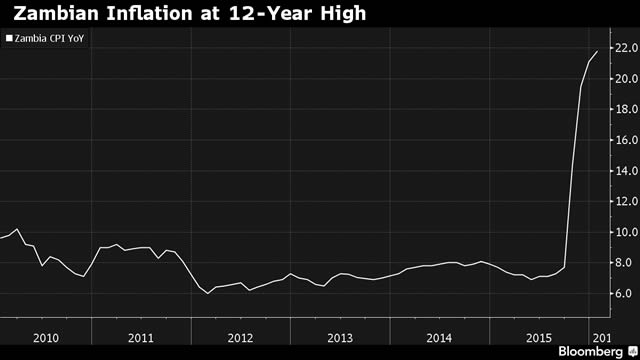
“If this is not well managed, we shall have increased cost of production therefore consumers of goods and services will pay high prices,” Ngoma said. “This will inevitably lead to an increase in inflation levels which the government has been at pains in trying to reduce since last year’s attainment of a single digit inflation level.”
Ngoma said an increase in inflation would lead to decreased investment output and economic growth.
He said it was gratifying to note that the global economy was recovering as this would positively contribute to Zambia’s economy.
Ngoma also said demand for commodities like copper would increase as the consumption of finished products was slowly being stimulated by the improving economic outlook.
“The recovery of the global economy will enhance trade and the loosening and movement of investment funds by investors will increase the prospects for Foreign Direct Investment (FDI) in emerging and developing markets,” Ngoma said. “This will increase our export earnings and foreign reserves.”
And Kalumba said there was need to address local economic dynamics if the country was to benefit from the predicted global economic recovery.
Kalumba, who is also president of the Association of Bureau de Change of Zambia, said the IMF and World Bank predictions were based on the fact that many countries had put up stimulus plans to boost their local economies.
Kalumba said there was need to increase tax revenues from the mining sector to enable the country benefit from the current high metal prices.
”If you look at the USA stimulus plan, it is focused on primarily creating local jobs and local spending, meaning that while the global economy is forecast to improve, the real beneficiaries will be those countries which have some stimulus plan of some sort,” Kalumba said. “Therefore, we need to address our local situation if we are to be part of the beneficiaries of the predicted global economic growth.
So far we have a number of factors working in our favour. The high copper prices favour us. However, we must remember that the copper mines are mainly privately owned and most are enjoying tax holidays. This means that there isn't much benefit to Zambia. We need as a matter of urgency to reinstitute the windfall tax. This will help us benefit from the high prices… So we have great potential to benefit from the predicted global growth, only if we can get our act together quickly on the windfall tax issue.”
Kalumba said there was need to invest part of the over US $1.8 billion foreign reserves at Bank of Zambia (BoZ) into infrastructure development to stimulate the local economy.
“Last year, we benefited from the increased IMF Special Drawing Rights SDR allocation to Zambia. However, we have used much of this to build our reserves,” said Kalumba. “My view is that you never get credit just to improve your reserve account. The IMF funds are credit to Zambia albeit at very good rates. What we need to do is to invest this money in infrastructure development as opposed to having a healthy reserve. In any case, even the IMF recommends reserves for three months cover, but our reserves cover more than three months. It is therefore prudent that we begin to apply these funds to our infrastructure development. At a basic level, what good is it for me to borrow money and keep it in the bank when my children need school fees? This is what we are doing by being happy with our reserves when our needs on the ground are dire.”
Separately, Lusaka business consultant Bob Sichinga said Zambia would continue to experience the effects of the global financial crisis if the exchange rate does not come down.
Sichinga said the devaluation of the kwacha meant that imports would be more expensive.
“Even when some recovery took place, the value of the kwacha did not get back to K3,300. It only came down to K4,600 where it has kind of stuck because now the exporters realise that they can have a crisis and decided to keep their money, the proceeds of copper,” Sichinga said. “They are holding those proceeds in safe havens, the so called flight-to-safety capital.”
Sichinga said this was a big challenge for the country as the current interest rates had pushed up the cost of doing business.
“For as long as that situation is maintained, for as long as that situation is obtained, it will be very difficult for Zambia to reduce the cost of doing business because what you pay for, for imports, what you pay for, for fuel - the price of fuel had to increase because you cannot expect to pay the same price for fuel as when the exchange rate was K3,300, it’s not possible,” Sichinga explained. “Not only that, even the United States dollar price overseas has also recovered, so you have no choice but to increase the price. As to whether to increase by that margin or not, that’s another matter. So this means that we have increased our operating costs. We have been impacted negatively; the cost of doing business has gone up because of that devaluation.”
Sichinga said recurrent goods, capital and imported goods had been impacted negatively in the aftermath of the global financial crisis.
“That is why we should be insisting that everybody that comes to invest in Zambia must not carry out everything, they can take capital in and out but foreign exchange regulations are important and need to be reviewed because you cannot allow people to carry out capital, profit and much more,” he said. “We need to keep a balance.”
On the World Bank projected 2010 economic growth of 4.8 for sub-Sahara and the Bank of Zambia’s 6.3 per cent growth projection for Zambia, Sichinga said the country could do more.
“In mature economies, if a country’s economy grows by even two per cent, it’s very good… but for developing countries like ourselves, we expected growth to be very high because there is so much poverty such that when you add value, it has got a higher percentage,” Sichinga said. “It is fair to say 4.8 might not be excessive an expectation. And if what the governor of the Bank of Zambia (Dr Caleb Fundanga) has told us is anything to go by, then at 6.3 per cent economic growth, we are way above the projected growth for the region.”
He said the country should not be concerned about the expected positive growth prospects.
“I am not so much concerned about the level at which we are but where we could be and my argument is that if you have been very inefficient in the past, and you show some growth you may look like you have achieved a lot and get a pat on the back,” he said. “But when you stop to think about it, you realize that you could have been at eight per cent, you were only at three per cent because you were inefficient so when you reach seven you won’t tell everyone you are doing very well. It is important not to emphasise where we are but also we should be talking about where we should be given the resources that we have.”
Sichinga also questioned where the reported drop in inflation was derived from as nothing much had changed.
“In December, inflation was said to have dropped to single digit. It was said to be conveniently 9.6 and I’m asking myself, where did this drop take place? Because fuel did not come down, the exchange rate did not come down to the level we could have expected and since Zambia’s business with the outside world is still costly… 50 per cent of our goods are from South Africa and their rand is not doing badly to give us an advantage over them,” said Sichinga. “Was the drop in the maize prices? Mealie meal has not come down! In which area did the price of commodities drop? Electricity went up. Are you feeling it in your pocket? I am not! Because of that, I cannot say inflation has gone down in as far as the cost of living is concerned.”
Labels: EAZ, HIDETO MITAMURA
Read more...
posted by MrK @ 11:33 AM
0 Comments