VP Mujuru launches Tonga programme
Monday, 22 October 2012 07:07
Tendai Mugabe recently in Binga
Vice President Joice Mujuru has launched the Tonga language programme aimed at documenting the history of the Tonga people. The programme was launched on Saturday at Lubimbi High School in Binga. Under the programme being supported by Twalumba Holdings, Tonga people would be asked to write poems, essays and stories on anything about Tonga language and culture.
The write-ups would be used to document the Tonga history and as part of the material for a Bachelor of Arts Degree introduced by the University of Zimbabwe Department of African Languages. Speaking at the launch, VP Mujuru said it was important to note that the Tonga people were still committed to their culture.
“The issue of our languages makes me feel happy. We take pride from young people like Dr Nkululeko Sibanda (Twalumba Holdings chief executive chairman), who are still committed to their culture,” she said.
VP Mujuru said President Mugabe initiated a programme to learn Tonga language in 1980, but it collapsed because there were no Tonga teachers in the country at that time.
She donated 4210 Tonga textbooks and 4200 exercise books for distribution to schools in the Lubimbi cluster.
VP Mujuru said they were targeting to print 50000 Tonga textbooks to promote learning of the language.
The books are part of the 30000 consignment donated to 150 schools in Binga by Cablemail.
VP Mujuru said part of the US$14,5 million Matabeleland North Community Share Ownership Scheme should be channelled towards electrification of Lubimbi High School and expansion of Lubimbi Clinic.
Lubimbi High School received 10 computers donated by President Mugabe in 2008, but they are lying idle because of lack of electricity. Dr Sibanda said the launch of the Tonga writing and poetry was a huge milestone in the history of the Tonga people.
“Our language has been distorted and mutilated, for example, we are called Tonga instead of Vasidonga. We have been made to feel inferior over the years and as a result we changed our names,” he said.
Dr Sibanda said the UZ Department of African Languages partnered with the University of Zambia to teach Tonga since there are no local lecturers on the language.
Labels: JOICE MUJURU, LOCAL LANGUAGES, TONGA CULTURE
Read more...
Keeping Tonga language alive
Thursday, 19 January 2012 00:00
Tichaona Zindoga Features Writer
Last year, a major milestone was achieved for minority languages in general and Tonga in particular, when the latter was officially tested at Grade Seven for the first time. The response was resounding, especially in Chief Mola's area in Kariba swhere schools recorded good passes with some achieving 100 percent pass rates in the subject. As Tonga language and culture are synonymous with the Zambezi River that borders Zimbabwe and Zambia, the riverine Chief Mola's area in the northwest of Zimbabwe is one of the bastions of Tonga language and culture.
Gokwe North, Binga, Hwange and other districts are other centres of Tonga culture. Chief Mola is one of 18 chiefs that were displaced on both sides of the river when Lake Kariba was being constructed in the 1950s.
The displacement of the Tonga people then was both physical and symbolic.
While they lost their ancestral lands - and river - they were also forgotten in terms of development, which has led to near synonymy between Tonga people and underdevelopment.
Their language and culture were also marginalised in a country where two native languages - Shona and Ndebele - are regarded as "national" and Tonga children have to be taught in those languages.
In fact, since the first school in the area in 1924 Tonga was never taught in schools until 2005.
Now all that has changed, and a renaissance of the language is well afoot.
A recent visit by The Herald showed this reawakening.
On one hand this is championed by the chief himself, Champion Rare, and on another a nascent group of young educated people.
Chief Mola believes there is a heritage to be preserved in the Tonga language, and a treasure to bequeath for posterity.
"The language is important for the sake of future generations. It also preserves our culture," Chief Mola said in an interview at his homestead, six kilometres from the shores of the mighty Zambezi River.
"Since 1924 when the first school was built we never learnt the language in schools and Ndebele was proposed once as substitute.
"We were happy when Tonga was introduced in 2005. We are also thankful for the work that has seen some Tonga books being published," he said.
Silveira House, in conjunction with interest groups such as Basilwizi (People of the Great River) Trust and other organisations undertook a project of translation and the development of a Tonga curriculum and literature.
With the curriculum and books in place, there remains one challenge.
"The biggest problem is that we do not have enough of our children who have gone to teachers' colleges or other higher learning institutions," laments Chief Mola.
"The teachers we have here are from Hurungwe and some from as far as Mutare and Masvingo.
"We are appealing to Government to prioritise the training of Tonga teachers for this area," he said.
The situation, he explained, was such that pupils in primary schools were being taught not in their mother language and some teachers from outside the region were not interested in learning the language.
Teachers here are predominantly Shona-speaking.
What makes this situation worse is that some mothers in the area cannot speak Shona, a trait they naturally pass onto their children who then get lost when they are instructed and taught in Shona and English.
The saving grace has been untrained teachers from the area who have been deployed to teach Grades 1-3.
However, if temporary teachers are not accommodated by Government, there risks being a huge gap and a slap in the face of the Tonga language.
Chief Mola emphasises that there be locals who become qualified teachers, a big challenge presently because the educated ones are few.
Chief Mola is not motivated by a sinister agenda in promoting the cause of the Tonga language and culture.
He said: "We are not tribalists but we wish our language to be recognised and respected. Shonas are many here but we want our children to be taught in their language."
He said he advocated for the same in contributing to the envisaged new constitution.
On the other hand, he has taken it upon himself to try to stamp out alien cultures such as "gure" that had threatened to set in.
Some Tonga people, having worked in farms in Hurungwe have adopted gure and want to practise or be buried according to that custom.
Chief Mola says he has, however, put his foot down and fines those who practise gure in his area because their rituals, which also involve nakedness, adult initiation among others, revolt Tonga traditions.
He said: "We have our own dances such as Nyere and our traditional songs. We told police to arrest people who practised gure here."
He fines the offenders two goats.
Teachers who come from other parts of the country insult Tonga sensibilities because of their dress and manners and Chief Mola has also expressed revulsion at this, though he has not scored any victories.
Meanwhile, the youth represent the best hope for the Tonga language - and they are stepping up to the plate.
Twenty-nine-year-old Stephen Murota, acting head at Malembeja Primary School, a satellite of Negande Primary, hopes to make a mark on the rise of the Tonga language.
Murota has teamed up with Dickson Siamanyiwa, Lovemore Mawere, America Mpofu, Berita Siachakanzwa and Government Chimbila to produce material that can be used in the learning of Tonga.
The group has the support of Chief Mola.
He explained: "We want to record traditional stories, lives and lifestyle and customs of Tonga people. We look at the general history, compile poems and short stories."
The group, which also translates English texts, has produced three manuscripts - one for the general history of Tonga people, another for poems and the other of short stories.
Murota and his group was hunting for a publisher and there is one on the wings while veteran educationist and author Stephen Chifunyise has reportedly given them a sympathetic nod.
"We are also trying to establish a Tonga art gallery and hoping to take up training in schools," added Murota.
For his dream to flourish, certain challenges have to be overcome.
With only school exercise books, the group has no proper database for its work and requires a computer - and an electricity generator - to store its work.
The group also requires technical advice from experts in education.
Communication here is almost non-existent and Murota has to walk 21km to Siakobvu Business Centre for a phone call.
But he will persevere for the cause of the mother language.
"Since the language has been recently introduced in schools, it has been shown to be a viable and recognised language not apart from others," he said.
This is a view shared by Muzamba Jahana, a teacher at Negande Primary School.
The 31-year-old is as passionate as he is impressive.
He represents the less appreciated side of Tonga people, namely that of being educated - like everyone else.
Jahana attained a Diploma in Education (Primary) in Gwanda and is setting sights on furthering his education.
"We have graduates and other professionals here," he stated dispelling the common myth that nothing good can ever come out of Binga.
A writer of his own manuscripts, and a Grade 5 Pupils and Revision books which he hopes will be adopted, Jahana is clear on the role of language in society.
He said: "Language is the basic tool which lays the foundation of formal learning.
"Tonga is our L1 (first language) and if we introduce Tonga concepts first it will be very easy for the acquisition of knowledge in any discipline because you will have provoked his eagerness to learn. You have to move from the known to the unknown."
He continued: "Language spells the lives of any ethnic group and lays the foundation for respect, acceptance, understanding and even interaction with other societies."
He said undermining Tonga, far from doing injustice to it, also deprives other societies of a chance to learn about the Tonga people and humanity in general.
Jahana says for Tonga to flourish, its learning must be promoted, it must be recognised at all levels, and Tonga arts and music must be accepted.
There is also need for cultural exchanges and Tonga should be taught side by side with other languages.
The media, said Jahana, should also promote Tonga.
He wished there could be an exclusive Tonga radio station.
Government is supportive of Tonga languages, like other minorities, and has since instructed that there be culture centres.
There are officers responsible for that at various levels at the Ministry of Education, Sport Arts and Culture.
l tichaona.zindoga@zimpapers.co.zw
Labels: CHIEFS, LAKE KARIBA, LOCAL LANGUAGES, TONGA TRADITIONAL ASSOCIATION
Read more...
Chichewa in progress: Dictionary project
By Nyasa Times
Published: February 9, 2011
The Dictionary Project of Foundation Heart for Malawi offers important news for the 20 million native and expatriate speakers and users of the South-Central African language of Chichewa. By the way, let no one feel offended by the usage of the word Chichewa. The actual name of the language may be Chinyanja, but in this article Dr. Steven Paas, the leader of the Project, prefers to call it Chichewa, because under that name it has become universally known.
In January 2011 two events happened that signify the progress of Chichewa as a language in general, and of Chichewa Lexicography in particular. The one pertains to the origin of Chichewa as a written language, and the other refers to modern Chichewa history.
The first event took place in Mandala House, Blantyre, Malawi’s first and oldest building in European style. In the upper storey of the building the Archives of the Society of Malawi can be found. On 31 January 2011 on a somewhat forgotten shelf Librarian Dora Wimbush was happy enough to find a copy of the first-ever book that includes Chichewa in writing. It is entitled ‘Dictionary of the Kiniassa Language’. Of course the name Kiniassa cannot mislead us, being Swahili for ‘language of the lake’, which unmistakenly refers to Chinyanja, i.e. Chichewa in this article. In the years 1850-1860 the dictionary was compiled by a German missionary, Johannes Rebmann, in Mombasa (present-day Kenya).[1] Rebmann worked for the Anglican Church Missionary Society (CMS). He sourced the book, of some 180 pages in A5 size, from a Malawian slave, Salimini, who originated from Mphande near Ntchisi.
Here we have the historical bridge between oral and written Chichewa. The book was first printed in 1877, but before that year hand-written copies circulated and were used by the first European travellers and missionaries in Malawi.
If David Livingstone possessed a copy, it would explain why the famous explorer showed some command of Chichewa during his five journeys in Malawi in the years 1858 and 1867. Bishop MacKenzie and his party of the Universities’ Mission to Central Africa (UMCA) may have used Rebmann’s vocabulary at their first Anglican attempt for mission in Malawi in 1861. No doubt Robert Laws, Henry Henderson, Duff MacDonald, James Steward, Edward D. Young etc., who in 1875 were the first Scottish missionaries in Malawi, used the manuscript, and from 1877 they must have used the printed book.
When the Anglicans under bishop Tozer returned to Malawi in 1881 they must have used printed copies of the Kiniassa Dictionary made by Rebmann, who after all was an employee of a fellow-Anglican mission organisation. The book was printed in Basle and in London, but of course the copies were mainly destined for usage in Africa. Where are they now? There must be more copies around in Malawi at present.
D.D. Phiri once saw the book in the National Archives in Zomba, but unfortunately later he could not trace it anymore. Another copy is with Menno Welling, a Dutch anthropologist of the Catholic University of Malawi. The book in Mandala House is the second copy Paas has ever seen, after the one he discovered in the Archives of the Basler Mission in Switzerland, where Rebmann trained to be a missionary.
Fortunately today the book is accessible to the general public on the internet, as Google has published a digitized version. On 27 and 28 January at Zomba Theological College Paas was given an opportunity to lecture on the origin of written Chichewa to an audience of students, theologians, and linguists. This marks a growing interest in the continuation of research of the history of Chichewa lexicography.
The second event in January 2011 pertained to the latest publication in the chain of lexicographical works of Chichewa. Through a process, which started in 1997 Paas in 2010 published the second edition of a combined Chichewa-English and English-Chichewa Dictionary of 858 pages (size A5). The book has been in shops in Malawi and Zambia since mid-2010. In January 4000 copies were distributed for free to pupils, teachers and libraries of some 30 secondary schools in Malawi.[2] Namikango Mission and the Tithandizane Educational Programme provided for the logistics of the operation. The Nation has covered the campaign by including a series of adverts during the months October to December, and two articles in their paper of 30 January 2011.[3] By free distribution to learners who have no economical means of their own the Dictionary Project of Foundation Heart for Malawi wants to provide a tool for communication to Chichewa spoken Africa, thus promoting education and development. This is being enabled by those who buy the book for themselves and for others, and by those who sponsor the Project. Apart from the book the Dictionary is accessible online.[4]
Although the process of compilation, edition and publication is led by an Azungu (= European) researcher, the dictionary’s position is quite different from its predecessors, which faded out from publicity sooner or later, especially when they were completely donor-driven foreign enterprises. The book is the result of the work of a team of Malawian contributors. Malawian institutions as the Centre for Language Studies and the Malawi Institute of Education have shown a firm interest in the continuity of the process and the book. These factors make Paas’ Chichewa Dictionary a genuinely Malawian enterprise that will last.
* Written by Steven Paas
[1] For further information on Rebmann, see: http://www.johannes-rebmann-stiftung.de/en/start.html
[2] See: http://www.chichewadictionary.org/pictures
[3] See: http://www.chichewadictionary.org/ under: Latest News
[4] See: http://translate.chichewadictionary.org/
Tagged with: Chichewa dictionary
Labels: LOCAL LANGUAGES, MALAWI
Read more...
Food crisis, inflation
By Dr Daniel Maswahu, London, UK
Tuesday May 06, 2008 [04:00]
Please allow me to echo the sentiments of research affiliate Toby Moorsom regarding food crisis and double-digit inflation (electronic Post, May 4, 2008).
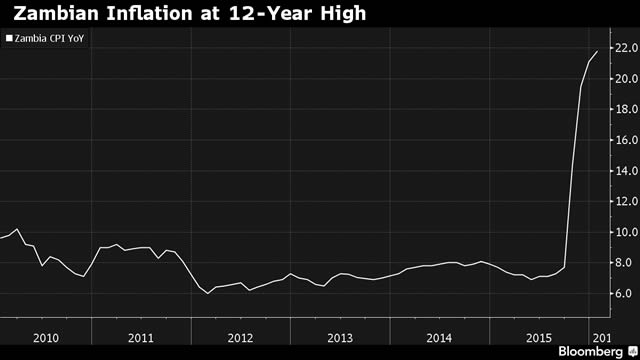
In the same week that Magande, sounding very much like Thabo Mbeki, declared that Zambia would not be affected by the global food crisis, the inflation rate leaped into double digits.
There are several thousands of languages in the world and all of them have a noun for donkey (read as inflation). However, the variation in what each language calls it does not change the nature of the donkey.
It will do no one any good if we forget that Zambia is riding on the success of other rising economies and as such, we are very vulnerable to fluctuations within these markets. The day that the Chinese and Indian economies nosedive is the same day that the true nature of any credit Mwanawasa and Magande have heaped upon themselves becomes evident.
Instead of pretending all is well and taking credit for doing nothing, Magande and his cohorts should have a reality check and stop playing with people's lives. The leap in the inflation rate is not a mirage and is the alarm signal, the battle cry indicating a slide in the Zambian economy that reflects rises in basic essentials such as fuel which in turn invariably push food prices upwards.
If Magande is going to cushion the effects of this adverse rise in inflation, we the people have every right to know, not only how bad the situation is, but also how much of our hard-earned kwacha or donor aid is going towards this cushion. This would be the position of any responsible government as opposed to that of hired labourers who will flee when the going gets tough.
To refuse to recognise this problem is simply another way for Magande and his government to say they are not going to do anything about it. It's hardly surprising attitude for (mis)leaders who are prepared to shamelessly take credit for apparent successes founded on the rising economies of other nations.
Volatile food prices and unstable food markets have been the downfall of many governments (ask KK and Mugabe) and there is little harm in Magande indicating that he has bookmarked these history lessons.
COMMENT - See here why neoliberalism is such an easy ideology to adopt. The Nationalists of Kenneth Kaunda's generation knew from personal experience that nothing comes from nothing. They knew the sacrifices and hard work that were necessary to achieve independence. And they worked hard to build the nation's infrastructure, and increase the number of children in education. However, neoliberalism, with it's core belief that 'the market will take care of it' refuse to governmen, refuse to take initiatives where governance is concerned, and basically sit back and watch it all unfold. No nationl has ever developed like this. The IMF and World Bank are to blame for spreading this ideology, but the government is to blame for listening to their advice. There are clear things that can be done to remedy food prices - get much more land under irrigation and cropping, build infrastructure to more remote parts of the country so they too can be hooked into the economy; build the hydrology that Zambia so desperately needs so more than a mere 3% of arable land is under irrigation and 97% no longer needs to rely on rainfall. But if you are a neoliberal, 'the market will take care of it'.
http://www.postzambia.com/post-read_article.php?articleId=41249
Promote local languages
By Raphael Mukuka, Sydney Australia
Tuesday May 06, 2008 [04:00]
A year ago, my wife wanted a Bemba dictionary so that she could learn my language. We couldn’t find it in Zambian, but she managed to buy one on the internet from a bookshop in UK.
It is important to discuss the use of the main languages in our media and education syllabus. Although we have a few Zambian languages taught in secondary schools, they don’t add any points when qualifying to higher institution of learning. As such, students shy away from language classes.
After so many years of independence, we should by now have achieved newspapers and other literature written in some of our languages.
If you walk around our bookshops, you will hardly find any local literature or other books written in our local languages.
There are some local authors who would be keen to get involved but because we haven’t promoted the use of our local languages, their skills are becoming white elephants.
In as much as we appreciate English as the official language, there should still be room for our languages to prevail and help preserve culture.
It's very encouraging to listen to some community Catholic radio stations around the country that use local languages to broadcast their programmes.
http://www.postzambia.com/post-read_article.php?articleId=41248
Zambians' work culture
By Ladislas Hibusu
Tuesday May 06, 2008 [04:00]
Thursday May 1, 2008 was an important day for Zambia and the rest of the world. A nation with over eleven million people whose formal workforce is less than 40 per cent should surely desire to develop. Yes, it is said that Zambia hosts about 60 per cent of the waters in the southern region of Africa yet it still experiences erratic power outages.
We have reached a level where future evolution is dependent on energy due to its value. Our dependence on energy is so apparent that it is being used as a basis to exercise power upon those who do not have.
Zambia has in the past four months experienced erratic power outages. We do not know what they have to say now since the rainy season is over yet the problem has persisted. The prices of petroleum products have been increasing at an unprecedented rate.
Zambia should have taken advantage of the abundant water situation to supply electricity to the neighbouring countries like Zimbabwe who are in dire need of electricity, hence generating income for the nation.
Zambia has abundant natural and human resources capable of translating the raw materials into tangible products. It could in fact be right to say Zambia is among the few countries in the world that have underutilised the God-given resources.
We have well-trained doctors, yet our health institutions are limping, every year, tertiary institutions offload the brains in the society only to the mercy of the street dust as they go round looking for employment. We just have too many educated people in Zambia whose preoccupations are seminars and workshops. We come up with brilliant plans and policies which are just on paper, implementation has proven futile.
There is need for a nexus understanding between the training institutions and the market. Believe you me, development would be a remote artificial object if the stakeholders and the citizens are not actively involved. It is nobler that the labour laws be restructured to provide a lee way for the dignity, just and civil rights of a worker.
For a long time, there has not been a moral and legitimate document that binds employers to respect the rights of a worker. The road to success requires firm foundation.
For 44 years, government has not devolved power. Rural areas have a lot of potential for development. We need system/ constitutional restructuring otherwise we will not go anywhere but just marking on time.
The biggest problem facing the country right now is the attitude towards work. The work culture in many government offices is so bad.
People just hang their jackets upon reporting and leave for other personal business. It takes commitment to fight poverty. This ought to be at all levels; that is at an individual, family, community and ultimately, at national level.
One man once told a story that there was a person in the village who built a big house and in his master bedroom he dug a pit latrine. When it got full we probably would all know what became of the mansion.
The bad odor became the biggest disturbance and he thereafter demanded strong intervention from the government. He complained that the government was redundant and not heeding his call.
This is probably the case with many people. We keep pointing accusing fingers at the government, yet we are part of the problem. We tend to be more reactionists than proactive and that digs a grave for mediocrity.
There is a need for a paradigm shift in taking full responsibility of our actions, otherwise our labour days will just be full of complaints and praises of our inactive labour laws. We need to take full account of our actions.
The tripartite rope of the labour story as told by ZCTU president Leonard Hikaumba and as endorsed by the Republican President is paramount. Everyone has a role and responsibility to play if our country is to develop. As citizens we need not fold arms for the government to do everything for us, to drag us off the pit.
The private sector needs to partner with the government. ultimately, everyone will be part of the development process in our search for victory over poor health and hunger, to mention but a few.
Labels: FOOD, INFLATION, LOCAL LANGUAGES
Read more...
50% plus 1 is a must
By Boyd Sitwala
Saturday May 03, 2008 [04:00]
I couldn’t help but wonder whether when some people are giving their opinions, they consider both the merits and demerits of what they are talking about. The sentiments by Pastor Charles Mwape that the 50 per cent plus one provision in the constitution would be a waste of the country's resources cannot go without comment. Pastor Mwape is insinuating that there would be violence and lawlessness if the 50 per cent plus one presidential majority threshold were enshrined in the Constitution.
Just to educate our misguided pastor on this topic, the violence that he purported as being the result of the 50 per cent plus one is purely as a result of incumbent presidents who refuse to leave office. The citizenry do not perpetuate such violence.
The 50 per cent plus one provision is meant to ensure that only a popular president is elected into office. The only people that oppose this in most countries are members of ruling parties, the reason being that incumbent presidents always have an upper hand in an election which ever way you look at it.
For example, the President appoints the chief justice loyal to him/her to be the returning officer for the presidential election.
In elections, whether political parties are funded or not, the ruling party always has an undue advantage of accessing resources to finance its campaigns.
Whichever way you look at it, the simple majority only favours the ruling party and can dangerously mean that it continues to rule even when it's clearly no longer popular. Our own President Mwanawasa won the 2001 elections through a simple majority of 27 per cent and this was because the opposition, which should have won, had their vote fragmented. As long as the simple majority rule continues, ruling parties will always carry the day.
The 50 per cent plus one provision would have filtered the candidates so that the worst candidates at the bottom of the list would have dropped out of the race and fewer candidates, say the best three or four would have gone for a re-run. Had that been the case, Mwanawasa would be in the opposition today and it is for that reason that he does not favour the idea.
I have no objection if Mwanawasa would have been elected by the majority. Even if Pastor Charles Mwape thinks Mwanawasa is a good leader, it does not mean we should ignore the 50 per cent plus one provision.
Let's not be docile and allow ourselves to be ruled under a mediocre constitution which is meant to just keep a group of people in power. The constitution is meant to safeguard the nation so that even future presidents should abide by it.
On the issue of wasting resources, the government already wastes resources on unbudgeted for and unnecessary by-elections which, except where the death of the MP is concerned, are usually caused by the ruling party enticing opposition MPs to denounce their parties to join the ruling party with a view to getting lucrative appointments. If the government sees it fit to waste resources like that, why should it be considered a waste of resources in ensure that a popular president is elected into office?
The 50 per cent plus one provision is the only way of ensuring that a popular president rules. Resources must always be found for such elections even if there needs to be a third re-run. Even Dr Kaunda, who used to contest elections without opponents, was only assured of continued presidency if he polled more than 50 per cent despite it not being provided for in the constitution.
Pastor Mwape should consult before misguiding his flock on this matter and put his personal feelings aside so that he can analyse both the merits and demerits of the 50 per cent plus one provision.
50% + 1 talk
By Godwin Yoram Mumba Kafue
Friday May 02, 2008 [04:00] Print Article Email Article
Following the outbursts from the opposition about the need to think hard by all stakeholders before including the 50 per cent plus one provision into our final constitution as the minimum requirement for any successful presidential candidate , I contend that perhaps our opposition leaders are too much in a hurry. they should revisit the proposal.
If you asked me, I would rather see the nation stick to the present scenario whereby the one with the highest number of votes, regardless of whether he has over or less than 50 per cent votes, becomes president.
A minority president is aware of the fact that he is the first among equals, realising that he has no monopoly of wisdom in his country. As such, he will spend much of his time trying to woe others of different opinion or persuasion to work with him.
He will consult first before implementing any of his decisions whereas the majority president tends to be arrogant and overbearing.
A majority president fears no one, not even parliament; He is totally oblivious of existence of checks and balances. The threshold of his so-called mandate of 50 per cent plus one goes to his head and begins to do things nonchalantly and, before you know it, he builds his own "tribe" alien to all the inalienable tribes in the country to the extent where all the resources are dished out only to his sycophants without qualification. Let us not build a monster president, or we will retard national development.
therefore, I am of the opinion that our emphasis should be on education for all. Let us pump more money in education so that the majority can understand why they are voting without succumbing to mob instinct. We have a problem in Africa because of lack of quality education. I have met a few people who have voted for someone just because he came from the same district as theirs regardless of the fact that the man had just come out of prison for fraud and was not long ago a patient at Chainama Mental Hospital; his understanding of how to invigorate the economy was totally below par.
This country needs a parliament of high integrity and very sharp ‘teeth’. It is wrong for Parliament to depend on the president instead of the president depending on parliament. This is why I am more comfortable with a minority president.
http://www.postzambia.com/post-read_article.php?articleId=41100
Local language use
By Tobias Hatembo, Lusaka.
Friday May 02, 2008 [04:00]
Allow me to give a word of caution after the comments made by Kaunda Wisdom in his letter titled ‘Local languages’ which appeared in the Sunday Post of April 27, 2008 in which he calls on fellow Zambians to be proud Africans and learn to use more of their local languages in comparison to our preference for the learning and use of English (or French).
I totally agree with Kaunda that as Zambians, we have reached a stage where we easily adopt anything exotic and abandon indigenous things. the purpose of language is to communicate, and doing away with our own languages amounts to plunder of our cultural identity.
However, under the current local language use preferences in Zambia, the adoption of English has not only been good for international recognition/communication. It has also played a very important role in harmonising the language situation in the country because local language use is dominated by only two languages, that is, Bemba and Nyanja.
The sentiments that the extensive use of the English may lead to the plunder of our cultural identity is itself an admission that a language is closely linked to a particular culture. If a language is predominantly used in a given society, the cultural values associated with it will tend to dominate that society and may lead to the ‘death’ of all other languages/cultures in that society.
Since our purpose is to preserve our cultural identity by preventing or reducing foreign language dominance, it is important that we recognise that English is not the only threat to our local languages and cultures. The dominance of Bemba and Nyanja is also a threat to other languages and cultures.
It is also important to recognise that ‘our linguistic identity’ is in fact a short cut for ‘our cultural identities’ because we are a multi-cultural society.
No one language in Zambia can represent our cultural identity and when we call for alertness against the plunder of our cultural identity by a foreign language, we need to ask ourselves whether our cultural identity is completely safe by guarding against the foreign language alone.
The destruction of one cultural identity through extensive use of another local language must equally be a source of concern as it has the same effect on our cultural identity as a foreign language.
My word of caution with respect to the above is that with the current dominant use of Bemba and Nyanja in Zambia, any guard against the extensive use, or against the demand in school for the exclusive use of the English language, is likely to protect only the Bemba and the Ngoni cultural identities (especially) if such a guard does not go with calls and actions for the balanced usage of all our seven main languages in the country. That situation would certainly not be good enough for us.
Labels: 50 PERCENT PLUS 1, LOCAL LANGUAGES
Read more...