BoZ calls on microfinance companies to expand lending
By Henry Sinyangwe
Tue 02 Oct. 2012, 14:00 CAT
MICROFINANCE institutions should begin to explore their critical role as providers of credit to the small, medium and emerging enterprises to support the growth potential of the Zambian economy, says Bank of Zambia deputy governor for operations Dr Bwalya Ng'andu.
Launching Microfinance Zambia Limited, a subsidiary of the Mahtani Group of Companies, in Lusaka yesterday, Dr Ng'andu said the central bank would like to see microfinance institutions make a deliberate effort to expand their lending to the productive sector of the economy and alter concentration of their loan books away from personal consumer loans to business loans.
"This launch brings to six the number of deposit-taking microfinance institutions to be licensed by the BoZ and to 32, the total number of MFIs, which includes both deposits and non-deposit taking institutions," Dr Ng'andu said.
He said he expected Microfinance Zambia to lead the way by becoming a significant provider of credit to SMEs to support their expansion and ultimately economic growth.
"We have seen that despite the Zambian economy recording significant and consistent growth over the last ten years, lending by the micro finance institutions sector has lagged behind. For instance, at the end of June 2012, total credit by microfinance institutions stood at approximately K1.5 trillion.
This is only 11.8 per cent of the total loans of the central bank," he said.
Dr Ng'andu said the central bank had also engaged lending institutions on the need to bring lending rates to reasonable levels.
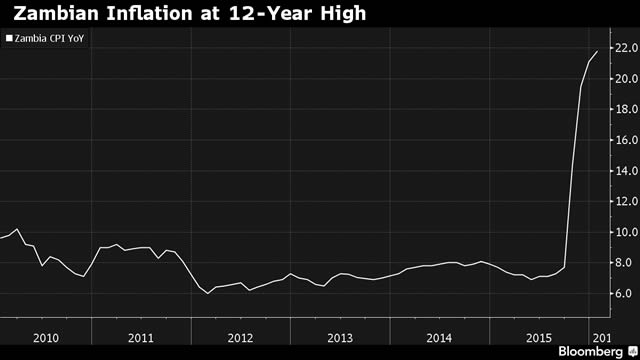
The Bank of Zambia recently introduced a benchmark lending rate for the banking sector at nine per cent, to compel lending institutions to lend at reasonable rates in line with country's low inflation rate.
And Mahtani Group of Companies chairman Rajan Mahtani said the organisation's ultimate goal was to ensure that it provided products and services that are structured around the key elements that promote economic growth and improvement of the welfare of its customers.
Mahtani said Microfinance Zambia Limited was committed to working with all stakeholders in promoting financial inclusion.
Labels: BOZ, MICROFINANCE
Read more...
Micro-finance: What role in Africa’s development?
Wednesday, 17 August 2011 02:00
David Mehdi Hamam and Oliver Schwank
THE honeymoon with micro-finance is over. Since the idea of lending or giving very small sums of money to poor people was introduced to the world by the pioneering Grameen Bank in Bangladesh, the approach has been taken up by many non-governmental organisations, donor agencies and the United Nations as an essential part of their poverty-reduction efforts.
Micro-finance has provided countless people with access to financial services.
But over-indebtedness of micro-finance clients in Andhra Pradesh has recently led to numerous suicides and a political crisis in India's fifth-largest state.
And controversy has swirled in Bangladesh around Mohamed Yunus, Nobel laureate and founder of the Grameen Bank.
Together, these events have generated a backlash in public perceptions of micro-finance.
Should development practitioners respond by abandoning efforts to bring financial services to the poor? Or should they seize on the heightened interest generated by the recent troubles to reassess the strengths, weaknesses and potential of microfinance?
Such a reassessment may be especially pertinent in Africa, where poor people's access to formal financial institutions remains very limited.
A critical innovation
Incomes in poor households are typically not only low, but also irregular.
Poor people need to be able to smooth consumption flows or finance larger expenditures, but they generally lack access to banks and other formal facilities.
Traditional financial institutions generally shy away from this market, either because they are unaware of it or because they deem it unprofitable.
Poor households and individuals, for their part, have difficulty proving their credit worthiness because they lack clearly defined property titles and other assets acceptable as collateral.
Their only alternatives are to seek loans from informal moneylenders or to draw on savings, options that are costly and risky.
Micro-finance - rather than just microcredit - includes savings and even insurance services for poor households.
By the end of 2007 more than 150 million clients worldwide had used the services of microcredit institutions. More than 100 million of them were among the poorest in their societies.
Despite microfinance's global reach, the overwhelming majority of its clients remain in Asia.
In Africa the sector is growing quickly, but from a comparatively small base.
At the end of 2008, microfinance institutions in sub-Saharan Africa reported reaching 16.5 million depositors and 6.5 million borrowers.
Controversy
With rapid growth comes closer scrutiny.
Yet it has proven difficult to measure the actual impact of micro-finance on poverty.
Proponents often rely on case studies and anecdotes.
This has prompted leading scholars to conclude that "strikingly, 30 years into the microfinance movement we have little solid evidence that it improves the lives of clients in measurable ways."
Recent and well-publicised cases of over-indebted households and interest rates approaching those charged by loan sharks have contributed to a more critical view of micro-finance - and of microcredit in particular.
There is also a more fundamental critique.
Some argue that channelling scarce resources into unproductive micro-enterprises in the informal sector may actually be detrimental to sustainable development and industrialisation. This is because tiny businesses contribute little to building an economy's productive capacities, or to its structural transformation.
Potential in Africa
Drawing from experience elsewhere, it seems clear that micro-finance is not a magic bullet.
On its own it cannot fundamentally transform African economies held back by many structural constraints.
Yet providing a whole range of financial services to the poor - including credit for small and micro-enterprises, savings facilities, insurance, pensions, and payment and transfer facilities - is clearly
desirable and can contribute to the achievement of the Millennium Development Goals.
Africa has seen an increase in such services in recent years. Micro-finance institutions offer a variety of products.
Where such institutions do not reach, traditional and informal providers - such as the tontines in Cameroon, the susus in Ghana and the banquiers ambulants in Benin - continue to serve the poor.
Their informality limits their potential to expand their activities, however, and they often charge high rates.
Farmers can insure their crops against adverse weather conditions, with payouts made directly to their mobile accounts if weather conditions indicate crop failure.
Policies and support Still, micro-finance institutions in Africa lack the capacity to match the needs of the poor.
They suffer from structural weaknesses.
The support services for them are of uneven quality, if they exist at all. And supervisory and coordinating bodies often have only limited resources. It is unreasonable to expect microfinance to fundamentally transform African economies.
And it cannot replace progressive social and economic policies for structural transformation, poverty reduction and job creation. But in light of the continent's persistent poverty, it can play an essential part for the foreseeable future in providing basic financial services to the poor, and thereby help advance Africa's development goals. - Africa Renewal
Labels: MICROFINANCE
Read more...
‘Govt won’t adjust ceiling amount for microfinance investment yet’
Written by Fridah Zinyama
Tuesday, September 29, 2009 4:53:32 PM
FINANCE minister Dr Situmbeko Musokotwane has revealed that the government has no immediate plans to review the minimum paid up capital requirements either upwards or downwards for microfinance institutions.
Responding to a question raised by Chipili member of parliament Davis Chipili who wanted to know when the provisions of the banking and financial services Act which deal with the amount of money to be invested in the micro financing institutions would be reviewed, Dr Musokotwane last week said no reviews would be made as the current required capital was low enough and therefore should serve to encourage more financial institutions to enter the formal financial sector.
“The current minimum paid up capital for deposit taking micro finances stands K250 million while for non-deposit taking is K25 million,” he said.
Dr Situmbeko however said should the need to review the capital requirements arise, this would be conducted as part of the law review exercise under the Financial National Development Plan (FNDP) which was aimed at modernising and harmonising various pieces of financial sector legislation.
“As of 30th June 2009, there were 25 microfinance institutions operating on the market,” said Dr Musokotwane.
There have been concerns from the public that the government should review the paid up minimum capital requirement for microfinance institutions so that more players could enter the sector.
Labels: DAVIS CHIPILI, MICROFINANCE, SITUMBEKO MUSOKOTWANE
Read more...
Govt urged to rethink on microfinance institutions
13 January, 2009 01:56:00
Gondwe: Government would no longer act as collections agent for loans Civil Servants Trade Union (CSTU) has asked Malawi government to rethink its recent decision to cease guaranteeing loans obtained from microfinance institutions (MFIs) or to increase loan facilities to its employers.
The government made the decision in December 2008, stating that MFIs were charging “exorbitant” interest rates increasing poverty among civil servants in the country.
Blue Financial Services and Izwe were specifically referenced under this accusation.
Finance Minisister Goodall Gondwe made the announcemrent and is reportedly adamant that the government would no longer guarantee or act as a collections agent for loans obtained from microfinance institutions.
It is unclear from the various reports whether this will pertain to all MFIs or just to those deemed to be unfairly exploiting civil servants.
There are currently nine MFIs in Malawi which report to the Mix Market, but Blue Financial Services and Izwe were not listed.
The lending rates of these institutions are not available on their websites, however it was reported in The Nation that Blue Financial Services offers credit at approximately four percent interest per month, or 48 percent per annum, while Izwe offers credit at 3.3 percent interest per month or 39.6 percent per annum.
“The Government cannot be used as an agent to reap off Malawians. We, therefore, have decided to part ways with the institutions,” Gondwe was quoted as saying.
CSTU president Elia Kamphinda Banda has suggested that, in response to this decision, the government should increase funds allocated to the loans advance facility in all ministries.
In a recent article on microfinance, the BBC commented that the flood of investor money into microfinance has caused concern that poor people will be taken advantage of by institutions seeking aggressive profits.
In the same article, Peter Ryan, founder of the Microloan Foundation which operates in Malawi, stated that for-profit loan providers in Malawi do not target the poorest of the poor and do not provide business training.
As of 2004 in Malawi, fewer than six percent of small and micro-enterprises had access to credit, while the Malawian microfinance industry was described in 2006 as being “in its infancy stage, relatively underdeveloped, and operating with limited outreach”.
Blue Financial Services is an African financial services company, founded in 2001.
For the fiscal year ending February 29, 2008, company assets (p. 136) totaled R 820.2 million (USD 109.6 million). On page 74, Blue states that its loan book increased by 133 percent to R 481.9 million (USD 64.4 million) from R 207 million (USD 27.7 million) in 2007.
As of January 9, its return on assets was 7.97 percent, and its return on equity was 14.81 percent. Total debt-equity ratio was 0.0365. Blue Financial Services Ltd. currently operates five branches throughout Malawi.
It currently offers personal and corporate life insurance, as well as one short-term loan product in the form of a salary advance and one personal loan product.
The terms of the loans were unavailable online and Blue Financial Services small, medium and micro-enterprise loans are not available in Malawi.—Microcapital.org
Labels: CSTU, MICROFINANCE
Read more...
BEB purchases Nedfin for $9m
By Fridah Zinyama
Monday May 26, 2008 [04:00]
BLUE Employee Benefits (BEB), based in Botswana has purchased Nedfin Limited for US$ 9 million as part of its growth strategy to become Africa’s largest microfinance institution. The acquisition was effective April 1, 2008 and the transaction agreement contains warranties and indemnities normal to a transaction of this nature and incorporates restraints of trade with regard to certain outgoing shareholders. BEB is a subsidiary of Blue Financial Services.
According to Blue Financial Services chief executive officer Dave van Niekerk, BEB is to purchase the entire share capital and shareholder loan accounts of Nedfin, which holds a Non-Banking Financial Institution Licence granted to it by the Bank of Zambia in September 2005.
“Nedfin has been focusing on the business of short-term lending through its eight Zambian branches,” he said.
Niekierk said that acquisition would result in Blue, which already has a presence in Zambia, having a combined branch network of 20 and would effectively make Blue the single biggest micro financier in Zambia.
“Nedfin, who has always been a competitor in Zambia, is focussed on shorter term loan products and is a cash generative business that has seen consistent growth in volumes and profitability in the last year,” he said. “This acquisition is part of Blue’s longer term strategy to become the largest micro financier in Africa.”
As part of its strategy to expand throughout Africa, the AltX-listed Blue will be listing on the Botswana Stock Exchange on May 15. This will be a dual-listing of existing shares and no new shares would be issued and no new capital is to be raised.
Labels: BEB, MICROFINANCE
Read more...