OMCs reject TAZAMA ‘contaminated’ diesel
By Kabanda Chulu and Abigail Chaponda
Wed 24 Feb. 2010, 04:12 CAT
SOME oil marketing companies (OMCs) have returned several quantities of diesel to TAZAMA that was found to be contaminated with mud and water. And TAZAMA Pipelines Limited confirmed that a parcel of diesel loaded into OMCs’ trucks on Monday was found with excess water and sludge.
A check at the Ndola fuel terminal revealed that over 30 Total fuel tankers and about 130 foreign carriers were parked waiting to offload fuel. In an interview, Total Zambia managing director Alexis Vok said business operations had been affected.
“I cannot comment now unless I meet people on the ground and of course we are affected because we cannot supply clients and yesterday we returned huge quantities back to TAZAMA and we hope they will come with the right specifications and our clients are not affected since we did not deliver,” said Vok.
But sources at Kansanshi Mining confirmed that four trucks belonging to Total Zambia were turned back for having contaminated diesel.
Energy ministry permanent secretary Teddy Kasonso expressed ignorance over the matter and promised to get in touch with TAZAMA management.
“I don’t have that information and let me get in touch with TAZAMA since I am not aware about this incident,” said Kasonso.
Kobil Oil managing director Jerry Thomas confirmed the contamination of diesel but said the company was not affected.
“If we are affected I would have known about it but since TAZAMA received the consignment, they are the best people to comment,” said Thomas.
And TAZAMA stated that the OMCs had been returning the fuel back to the terminal.
TAZAMA stated that the returned fuel was being offloaded and tested and would be sent to Indeni refinery for reprocessing if necessary.
“As is the normal practice when this kind of problem arises, the Terminal is accepting the fuel back and immediately replacing it with good fuel. It is expected that around thirty truckloads will be involved in this exercise,” the statement read in part.
“Meanwhile this problem at the Terminal has nothing to do with the trucks currently parked at the Terminal which have brought from Dar-es-Salaam Gasoil imported by the government through Dalbit. The trucks are awaiting formalities before they can offload the imported gasoil.”
Labels: DIESEL, OMCs, TAZAMA
Read more...
Govt wants to change crude oil suppliers
By Kabanda Chulu and Chibaula Silwamba
Thu 26 Nov. 2009, 04:01 CAT
GOVERNMENT is intending to use the Zambia Public Procurement Authority (ZPPA) in a bid-rigging exercise for the supply and delivery of 1.4 million metric tonnes of crude oil in favour of a Russian company which energy minister Kenneth Konga has allegedly negotiated with.
But ZPPA director general Samuel Chibuye on Monday said making changes to the tender document is a normal procedure.
Well-placed government sources revealed that the US $1.4 billion two-year contract to supply and deliver 1,440,000 metric tonnes of comingled petroleum feedstock would not be transparent because the government, through Konga, has already selected Lukoil International Trading and Supply Company (LITASCO) as a preferred bidder hence the ongoing bidding process being done by the ZPPA would just be a rubber stamp procedure.
The sources disclosed that the government directed the ZPPA to design tender evaluations and specifications that could only be met by LITASCO and that the first cargo delivery was scheduled by January 1, 2010 and yet bids would close on December 18, 2009.
“Last week Hon Konga was in Nigeria and Tanzania on an alleged private visit where he allegedly met officials from this company and it is like they have finalised everything so government wants to bid-rig in favour of LITASCO,” the source disclosed.
“In this process, the ZPPA will be used to rubber stamp and try to legitimise the whole process. Imagine the bids will close on 18th December 2009 and two weeks later (1st January 2010), a successful bidder will have to supply the first cargo or shipment, meaning that the ZPPA will have no time to evaluate bids that will qualify to the next stage, so it is like everything has been staged-managed.”
Konga could not be reached for comment because he is reportedly out of the country on a private visit to India and United Arab Emirates.
The two-year contract to supply and deliver comingled petroleum feedstock was awarded to the Independent Petroleum Group (IPG) of Kuwait but is coming to an end next month, hence the need to invite expressions of interest to all prospective bidders. LITASCO participated in the last bid but lost to IPG.
Another well-placed government source disclosed that the Ministry of Energy submitted before ZPPA a tender document inviting bidders but there were efforts to doctor the same document in an effort to eliminate competition.
“This is meant to source a preferred supplier of feedstock, in this case LITASCO. The changes that have been made to the original tender document prepared by the Ministry of Energy and Water Development are: (1) bidders must own or time charter in excess of 30 oil tankers at any given time; (2) the bidder must own or operate a refinery capacity in excess of 1 million barrels per day; (3) bidders must produce crude oil in excess of 1 million barrels per day and (4) bidders must trade in excess of 2 million of crude oil per month,” the source said.
“The above conditions are aimed at eliminating potential competitors who could otherwise supply the requirements for Zambia. All these efforts are aimed at eliminating all competition and are stage-managed to give this contract to LITASCO.”
But Chibuye on Monday said ZPPA had received some correspondence from other bidders, without mentioning their names, who complained that the conditions were too difficult, hence ZPPA and the Ministry of Energy and Water Development were looking at those concerns to find a level playing field.
“The changes are not final,” Chibuye said. “We have also received some correspondence from other bidders who are basically saying that we need to revise some of the conditions because they are too onerous and that is a normal procedure. Bidders are free to complain and make changes. On the basis of those letters we received from bidders, we do normally liaise with the ministry so that we can make certain changes.”
Asked about the concerns on the four changes and after the four amended conditions were read to him, Chibuye responded: “Correct! That is what I am saying. We have received letters from other bidders who are saying those conditions are too onerous, they conditions will be too difficult for some of them. So we are trying to level the playing field. That is what they requested and we have no problems with that.”
He, however, said ZPPA had to involve the Ministry of Energy and Water Development in revising the conditions.
“We can't do it on our own, we have to liaise with the users which are the ministry so that at the end of the day we agree on the level that we are going to use. If they are too onerous, obviously we have to take that into account,” Chibuye explained. “Sometimes we are accused of giving business to smalltownfields, so it's a delicate balancing act. Where do you draw the line? So those are the issues we are discussing with the ministry right now.”
Asked about the concern that the tender document was amended to include the four conditions aimed at disadvantaging other bidders to pave way for LITASCO to get the contract, Chibuye said that was not true.
“No! No! That is not the issue because usually what should happen is this that the bidders, what has happened is exactly what is the normal process. When the bidder buys the document, in fact, they are free to inspect the document before they buy but even when they buy, it's a bulky document. Some of them don't have the time or the expertise to inspect but when they came across those issues they raise them with both us and as well as the ministry. Our duty is to consider those. We don't normally waive them off and say, 'look! We can't change.' Those are not cast in stones,” Chibuye said. “So we are within the period within which those changes or those communications with the bidders can be made and that is what we are doing right now.”
Asked about State House's alleged links to LITASCO and its suspected efforts to influence the tender procedures, Chibuye said he did not know anything about that.
“I don't know. No! No! At the end of the day what we want to do is transparent and credible tender process,” said Chibuye. “At the end of the day, people will be able to see and that is why we are saying when people complain, our job is to listen and see if those complaints are genuine and if they are, then we make the changes as necessary and that is
Labels: FUEL, KENNETH KONGA, LITASCO, OIL, OMCs, PROCUREMENT SYSTEMS, ZPPA
Read more...
‘Govt shouldn’t blame ERB for fuel shortage’
By Kabanda Chulu
Wed 04 Nov. 2009, 04:01 CAT
GOVERNMENT should not blame the Energy Regulation Board (ERB) for the countrywide fuel shortage because energy permanent secretary Peter Mumba had written to oil marketing companies (OMCs) assuring of a price increment when finished petroleum products are imported, The Post has been informed.
And sources at Ministry of Energy have dismissed chief government spokesperson Lieutenant General Ronnie Shikapwasha's assurances that fuel supply will normalise soon, saying the fuel stocks were too little to meet Zambia's daily consumption of about 700,000 litres for petrol and over 900,000 litres for diesel.
Despite Lt Gen Shikapwasha's assurances, several service stations in Lusaka do not have sufficient fuel and petrol attendants revealed that they were selling whatever stocks they received.
According to a letter dated October 19, 2009 and addressed to OMCs, Mumba stated that his ministry and that of finance and the ERB were working together on the figures for the duty waivers based on the agreed quantities of 11 million litres for petrol, 21 million litres of diesel and one million litres of kerosene that would be imported by the 17 OMCs registered in the country.
“As you will recall, it was agreed during our meeting at State House on 14th October 2009 that OMCs should also be allowed to import finished petroleum products during the period of the Indeni Refinery shutdown in order to supplement government imports, as agreed this letter serves to inform you that government will provide duty waivers to the OMCs on the imported diesel and unleaded petrol,” stated Mumba.
“As agreed at State House by yourselves that the reduction of duties only will still not make the importation of petrol economical, government is therefore working on a slight upward adjustment in the price of petrol and you will be advised in due course of details of the price increase.”
On Thursday, October 29, 2009, ERB acting executive director Lukonde Mfula announced that prices of petroleum products had been revised upwards with diesel increasing from K5,478 to K6,026 per litre while petrol prices had been pegged at K5,818 from K6,932 per litre.
Mfula stated that the current price review was necessitated by the importation of refined petroleum products during the on-going shutdown of Indeni Refinery as well as changes in international oil prices and also the inclusion of a K65.00 per litre cost line that has been introduced to finance cost of holding 15 days statutory operating stocks by all OMCs.
But ERB board chairman Sikota Wina immediately withdrew Mfula's statement and said there were more pressing matters concerning fuel supply stability in the country and fuel pricing was not one of them.
However, the sources said the ERB made a decision looking at Mumba's assurance to the OMCs and what would be the landed cost of the imported petroleum products.
The sources stated that the decision to import fuel products does not rest with government but with OMCs since it is purely a business decision.
“Government wants the situation to look as though ERB ignored or did not consult the board but this was not the case since the action taken by management at ERB was within its mandate. As a result of politics, Wina was forced to overrule management to show that there is no coordination and yet it was agreed by all stakeholders that importation of petrol will only make sense with price increment,” the sources said. “OMCs can import fuel products any time they want but since the price is regulated by government through ERB, then OMCs have to request for waivers or upward adjustment of prices in order to make some profit.”
Last Friday, finance minister Dr Situmbeko Musokotwane issued statutory instrument (SI) number 89 of 2009 to waive 25 per cent duty on importation of petroleum products but industry experts have argued that only diesel will be profitable for OMCs to import since its excise duty stands at seven per cent while that of petrol is pegged at 36 per cent hence there might be reluctance in importing the commodity.
The sources further stated that assurances by Lt Gen Shikapwasha were not true since national daily consumption outstrips what TAZAMA was holding in reserves.
Lt Gen Shikapwasha on Monday stated that TAZAMA had 1,705,000 litres of petrol against a daily consumption of 700,000 litres while for diesel, TAZAMA was holding 896, 000 litres which is far short of the over 900,000 litres national daily consumption.
On August 28, 2009, Dr Musokotwane issued SI number 55 of 2009 to allow the ministry of energy to import diesel duty free but since the ministry does not have capacity, it contracted, without tender procedures, Dalbit Petroleum of Kenya and IPG of Kuwait to import the commodity.
Labels: ERB, FUEL, OMCs, PETER MUMBA
Read more...
Lies will not put fuel in the pumps
By Editor
Tue 03 Nov. 2009, 04:00 CAT
THE persistent shortage of fuel which the country has continued to experience needs to be addressed in an honest and serious manner.
We say this because this problem which started a few weeks ago has continued despite the numerous government assurances that trucks are rolling into the country with the commodity.
Much as the so-called trucks are being cleared at the country’s borders, it is undisputable that the shortage of the commodity is being experienced in all parts of our country. In Lusaka, the supply is intermittent and this is exacerbating the shortage because demand is outstripping supply. People are rushing to service stations whenever they hear that fuel is in stock.
Places such as Kasama, Chipata, Livingstone and Mazabuka, among others, do not have adequate stocks of the commodity. What is worse is that this shortage of fuel which started with petrol is now extending to diesel when we were assured by the Ministry of Energy and Water Development that there were enough stocks of diesel at Indeni Petroleum Refinery. This situation should not be allowed to continue.
One would have thought that we learnt from the worst shortage that the country experienced in September 2005. We thought that enough lessons had been learnt as far as the management of the flow and supply of fuel, but it appears we are mistaken. Rupiah Banda and his friends cannot say that this fuel shortage was unforeseen. Indeni Petroleum Refinery indicated that they needed to replace the catalyst for the plant to continue operating but the government did not intervene and allowed them to continue operating until the plant had a technical fault.
What followed was the closure of the plant for routine maintenance and we were assured that there were enough stocks. Numerous statements have been made by energy minister Kenneth Konga and his permanent secretary Peter Mumba and there have been many assurances that Dalbit Petroleum of Kenya and Independent Petroleum Group (IPG) of Kuwait will bring in the commodity.
And the two companies are doing that. We were told that oil marketing companies (OMCs) will also import fuel following the waiver of the 25 per cent import duty. To start with, the statutory instrument for the waiver was only signed last Friday - October 30, 2009 - weeks into the shortage. Some of the OMCs are even hesitant to bring in petroleum products because of the other taxes, which will still make importation expensive for them.
For instance, we are aware that the OMCs could manage to bring in diesel because even with the seven per cent excise duty, which they have to pay, they can still manage to sell it at the current price. But we are aware that the OMCs have concerns on importation of petrol because even with the waiver, the excise duty and road levy still remains at 36 per cent and this might make it impossible for them to sell the commodity at the current price. In the midst of this fuel crisis, the Energy Regulation Board (ERB) announced an increase in fuel prices and reversed their decision barely hours after the announcement.
This is total confusion, which cannot be allowed to continue in a critical sector such as energy. The assurances and the statements that are being made by government officials, paid activists and other mercenaries on the fuel situation are just confusing the people because the situation on the ground is totally different. Actually Rupiah and his friends would do well to acknowledge that they have created a mess in this critical sector and work towards cleaning it up. The first step in solving any problem is to acknowledge its existence.
When a problem is openly admitted, it is easy to go about it in an open manner. Of course, admitting a problem opens those responsible to attacks from their political opponents. But when mistakes are admitted, political opponents can only use them in a very limited manner because the problems will be solved.
Honesty and truthfulness are very important in situations like these. People do not want to listen to empty heads that are given expensive airtime and newspaper space to try and hoodwink them with clear lies on the fuel situation.
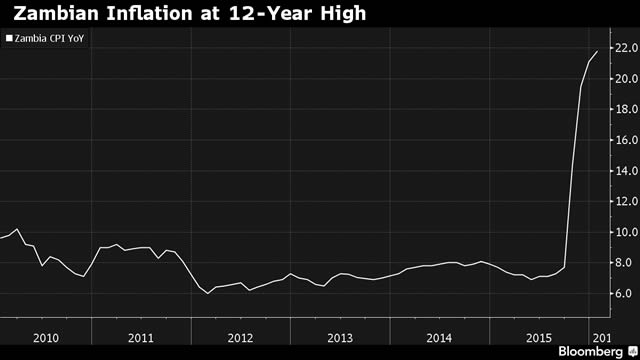
We are in the rainy season and people are preparing their fields, if not already planting. They need fuel to till the land, in the case of commercial farmers; others need to move farming inputs from one point to another. There are several farming activities that risk being grounded to a halt because of the current fuel shortage if it is not addressed urgently. If Rupiah and his friends cannot provide fuel to the farmers, how else do they expect to have a food secure 2010? How do they expect to prevent the hunger problem and subsequently lower poverty levels? How do Rupiah and his friends expect the country’s sectors such as mines and tourism to operate effectively if people spend their time looking for fuel? We also know that this shortage of fuel if not properly handled can lead to an increase in prices of goods and services, including food, and ultimately affect the country’s inflation rates.
There is need for honesty and seriousness on the part of those in government when it comes to issues like these. You cannot run a country on the basis of firefighting when you have the option of taking a preventive approach. You cannot deliver to the people if you put your interests and those of your pocket and those of your sons and friends first. You cannot deliver if you are just preoccupied with serving yourself, looking for money-making ventures and opportunities for kickbacks instead of serving the people.
This situation could have been avoided with more honesty, integrity and proper planning. Essentially, the oil marketing companies (OMCs) are supposed to have petroleum stocks to last up to 15 days but right now we are not aware as to how much stock these companies have because there has never been a serious audit by the government. We are also aware of the Strategic Reserve Fund (SRF) whose purpose is to help administer fuel reserves but one cannot help but wonder what is happening or has happenned to this fund. Even as Indeni resumes operations any time from now, we are not sure if all the necessary work has been done to prevent another breakdown.
The country needs a long-term solution to the fuel shortage. Contracting Dalbit and IPG is not a solution to the current mess. We have had enough shortages of fuel in this country and by now we should have a formula of what works or does not work for us. Giving contracts to friends to supply fuel does not work.
It appears Rupiah and his friends are content with running this important sector without a strategic plan because this helps them manipulate things to their own personal benefit any time. The constant breakdowns at Indeni need to be looked at in a different way if the plan we have been using is not working. If the government wants to increase uptake at Indeni, they should ensure a complete overhaul of the obsolete equipment for it to operate efficiently.
We do realise the fact that the plant needs regular service and maintenance but it is not prudent to fix a problem in one area today when you know that there are chances of having another problem in a different area. We also need to look at all the other strategies that have been put in place in the energy sector as far as the supply of petroleum products is concerned. We are not saying the country cannot have problems. Problems will always be there no matter how perfect we want things to turn out.
What the country needs is a well thought-out energy plan so that minor hiccups in the supply chain do not send panic among the people. We do not need to remind Rupiah and his friends on the importance of a steady energy supply system to economic growth.
Labels: INDENI, OMCs, RONNIE SHIKAPWASHA
Read more...
Don’t blame anyone over fuel shortage, Banda tells OMCs
Written by George Chellah, Chiwoyu Sinyangwe, Mutuna Chanda and Abigail Chaponda
Monday, October 19, 2009 7:14:41 AM
PRESIDENT Rupiah Banda has told oil marketing companies (OMCs) and other stakeholders in the energy sector not to blame anyone over the current shortage of fuel in the country.
And key OMCs have expressed ignorance of the suspension of the 25 per cent import duty on finished petroleum products as announced by energy minister Kenneth Konga on Saturday.
Meanwhile, the shortage of petrol has spread to almost all Copperbelt towns, thereby paralysing some economic activities.
Well-placed sources yesterday disclosed that President Banda last week held a meeting with OMCs at State House over the current fuel shortages.
“The meeting was attended by the President himself, officials from the Ministry of Energy, the Energy Regulation Board (ERB) and OMCs. Although, President Banda only attended the meeting for about an hour,” the source said.
“The President told the meeting that people should not focus on finger-pointing but work together towards resolving the problem. He also said he was disappointed that the fuel situation had degenerated into the current situation. The President said he thought they were on top of things.”
The sources said President Banda pledged to the OMCs that the government would assist them to bring in petroleum products.
“This assistance could only have been through a duty waiver on imported products through the issuance of a Statutory Instrument [SI]. But by Saturday evening the SI had not been issued and signed by the government despite the President's assurances that he was going to assist the OMCs to bring fuel,” the source said.
“As things stand now, without the SI the OMCs cannot start importing fuel despite the government's assurance because of the Zambia Revenue Authority's duty implications at the border.”
And both BP Zambia Plc and Total expressed ignorance of the issuance of Statutory Instrument to suspend the 25 per cent import duty on finished petroleum products as claimed by Konga on Saturday.
Konga on Saturday morning told Reuters that the government had zero-rated the importation of fuel to enable the OMCs react to the crisis which threatened to halt the economic wheels of the country.
BP Zambia acting general manager Kenny Muhanga said the country's biggest OMC by market share had not commissioned the imports owing to lack of official communication from the Ministry of Energy and Water Development.
“We have not received official communication yet. Probably, we might get it by tomorrow if it is there,” Muhanga said.
“All we can say is that we are supposed to be trading, that is our main business and that is why we are there. So, if the product is not available, naturally, it adversely affects our operations and we are hopeful that things will actually normalise.”
He said BP Zambia would only consider importing petroleum products upon seeing the SI effecting the suspension of import duty.
“Until, we see what is in the communication, it very difficult to make any position. We just need to assess what is in that communication then based on that a decision will have to be made on the way forward,” he said.
Muhanga said the fuel crisis had negatively impacted on the operations of the company. Total Zambia managing director Alexis Vovk also expressed ignorance on the SI. Vovk refused to comment on the matter further, saying he does not speak to journalists on the phone.
“I have no comment to make because I was not aware directly of this statement. I have to check with the ministry first,” Vovk said.
Asked if Total had been officially communicated to, Vovk said: “Not as far as I know, I left the office at 12 yesterday [Saturday], so maybe it arrived late but thank you for the information.”
Meanwhile, energy permanent secretary Peter Mumba disclosed that Kenyan-based Dalbit Petroleum Limited and Independent Petroleum Group (IPG) of Kuwait were yesterday expected to pump into the country 1.5 million litres of petrol and in excess of two million litres of diesel.
“Today [yesterday] we are expecting trucks to hit the country both from Dar es Salaam and Beira port in Mozambique, so be on the lookout for the trucks by late this afternoon,” Mumba said.
“The quantity is about 1.5 million litres of petrol and in excess of two million diesel and once they arrive today, it will be on daily basis. Independent Petroleum Group (IPG) and Dalbit like the minister mentioned in Parliament.”
Asked whether the fuel crisis would end by today given the expected stocks yesterday, Mumba said: “I will not say with 100 per cent. Until we see the trucks, then I can say because sometimes, when the trucks arrive we may perhaps receive half of the trucks while other trucks will still be on the way but on the Zambian side. So, to say that tomorrow, it will normalise until I see the trucks. But certainly, we have some trucks which have crossed Nakonde and we are expecting more trucks to cross Chirundu [border post].”
Mumba said the government last week ordered OMCs to start importing fuel to avert the crisis.
“We had a meeting with OMCs on Wednesday last week where we agreed that the OMCs should import 21 million litres of diesel and 11 million of petrol,” said Mumba. “So, they should be swinging into action to begin the imports. Others have probably already placed orders because the meeting with them conveyed that decision.”
But an energy expert warned that OMCs could be forced to increase the price of fuel by 27 per cent to break even in the event that they imported fuel without the government signing the Statutory Instrument for the waiver on import duty.
“Dalbit is enjoying duty-free imports although their capacity is limited, only supplying few trucks to Indeni. Yesterday [Saturday] nothing was released causing further strain on local supplies, as Dalbit trucks had not arrived,” said the source who preferred anonymity. “This problem could have been avoided and worse still government is not helping matters. If they were serious the SI would have been signed immediately as the fuel situation is now getting into a crisis situation.
“The OMCs are justified in not importing as they will just treat the government assurance as speculation because they have not seen any SI If they import without the duty waiver it means that they may be forced to increase the fuel price by at least 27 per cent to break even.”
Dalbit Petroleum Limited is a privately-owned company incorporated under the Companies Act Cap 486 of the Laws of Kenya.
The Company is licensed to procure and market petroleum products in the domestic Kenyan market and for export to the neighbouring Great Lakes Region in Africa.
Two evaluation reports on the tender for the supply and delivery of diesel to Zambia revealed serious weaknesses for potential suppliers - Dalbit Petroleum Limited and Energy Trading Group - whom the Ministry of Energy is trying to use to bring the commodity.
The records have revealed that Dalbit Petroleum Limited of Kenya participated in the tendering process in Zambia, although it was unsuccessful.
According to the evaluation and re-evaluation reports obtained by The Post, during the tendering process Energy Trading Group presented a trading license valid up to July 2007 and their profile did not indicate how much volume they were able to supply.
The report revealed that despite Dalbit Petroleum Limited having more than five years experience in the supply and delivery of petroleum products, most of its supply and delivery was for relatively small quantities.
It revealed that Dalbit Petroleum did not indicate ability to mobilise rail tank wagons and did not clearly outline the key roles for the staff as requested in the bidding document.
Despite these weaknesses, the Ministry of Energy Tender Committee went ahead to recommend to the Zambia National Tender Board (ZNTB) to grant them authority to enter into negotiations with Energy Trading Group and Dalbit Petroleum Limited for each company to supply 7,500 cubic metres of diesel to Zambia.
According to the first evaluation report, in the initial bidding process, there were seven bidders that included Sabela Energy, Oryx Oil & Gas S.A, Petroneft, Independent Petroleum Group (IPG), Dalbit Petroleum Limited, Trafigura Beheer BV and Energy Trading Group.
However, Sabela Energy and Trafigura Beheer BV were eliminated at the preliminary evaluation stage because they were found to be non-responsive due to their failure to submit either audited financial statements or bank statements for the past three years and the required bid security of US $1 million [about K5 billion].
During technical evaluation part one stage, IPG got 94.73 points, Oryx Oil and Gas S.A got 80.67 points, Energy Trading got 77.17 points, Petroneft got 67.12 points while Dalbit Petroleum was last with 65.24 points.
The report, therefore, revealed that Dalbit Petroleum was eliminated because it had failed to meet the 70 points cut-off line.
Meanwhile, signs of Copperbelt towns being affected by the current petrol shortage experienced in the past week in Lusaka, parts of Eastern and Southern provinces emerged on Friday evening with erratic supply mainly in Kitwe.
On Friday evening, only Engen filling station in Kitwe at the corner of Independence and Freedom Avenues, BP on President's Avenue and Total on Oxford Street had petrol while the others turned motorists away.
Late Saturday afternoon, only BP filling station on Central Street had petrol while the others had run dry.
Yesterday, many vehicles had queued on Oxford Street waiting to draw petrol at Total while queues had formed at other filling stations such as BP in Buchi.
One of the motorists found waiting to draw petrol at Total on Oxford Street, Patson Mambwe, complained that the fuel shortage was a big inconvenience because he was supposed to have been at his office in Ndola at 07:00 hours but was on a queue at the service station by 11:15 hours.
He said the government should have immediately waived the 25 per cent import duty on petrol to allow OMCs to import fuel.
Intermittent supplies of petrol were experienced in Chingola on Friday and the commodity ran out in almost all the five filling stations in the town by Saturday while Chililabombwe was completely dry.
On Saturday, all the filling stations in Ndola had run out of petrol and posters at many of them had been stuck notifying motorists of the shortage.
In Mufulira, only one filling station had petrol on Saturday while the other had run out, forcing motorists to queue for the commodity.
By yesterday, the situation had seemingly stabilised.
UNIP Copperbelt Province chairman Isa Zgambo challenged President Banda to explain what was going on regarding the fuel supply situation.
Zgambo said UNIP which had turned 50 years had built industries such as Indeni Oil Refinery and Nitrogen Chemicals of Zambia (NCZ) but that the MMD administration had failed to run the institutions.
Labels: FUEL, OMCs, PETER MUMBA, RUPIAH BANDA, SHORTAGES
Read more...
Govt won't allow TAZAMA to export, says Konga
Written by Kabanda Chulu and Chiwoyu Sinyangwe
Monday, January 12, 2009 6:41:54 AM
ENERGY minister Kenneth Konga has said the government will not allow the Tanzania Zambia Mafuta (TAZAMA) to start exporting finished petroleum products to neighbouring Democratic Republic of Congo (DRC) to avoid shortages.
And industry sources have said the unreliability of Indeni Oil Refinery has compelled Oil Marketing Companies (OMCs) to overstock reserves with imported fuel thereby making it difficult for them to uplift the commodity from Ndola Fuel Terminal, which is managed by TAZAMA.
In desperate attempts to force OMCs to start uplifting fuel from Ndola Fuel Terminal, the government increased fuel import tax to 25 per cent from five per cent,
Sources within the Ministry of Energy disclosed that TAZAMA had asked the government to authorise exports of finished petroleum products to copper mines in the DRC, saying the country had more fuel than was required.
But Konga said exports could not be sanctioned because they were likely to result in shortages of petroleum products in the country.
He said the OMCs were only allowed to import finished petroleum products when the refinery was shut down for routine maintenance works and the government expects OMCs to start getting petroleum products locally since the refinery had resumed operations.
“Fuel is not a commodity that can stay for a long time and even if the OMCs had surplus from what they imported, they have been offloading these products on the market hence we expect them to start uplifting from TAZAMA because their surplus will not last forever,” Konga said. “So in this case, we cannot allow TAZAMA to export because it will create shortages and we think fuel should be consumed locally.”
He said the government was monitoring the situation to ascertain whether there were enough stocks of petroleum products before sanctioning exports to the DRC as requested by TAZAMA.
“As at now, we cannot allow exports unless it is established that we have enough fuel and if it becomes imperative that we can export, then we can sanction that but not with the current situation and this is why we have to continuously monitor the situation because we do not want to create fuel shortages,” said Konga.
And industry sources disclosed that the OMCs had been compelled to continuously import fuel because Indeni Oil Refinery shuts operations abruptly, a development that they said often threw their planning into disarray.
And an energy expert who declined to be named said the government was playing ‘double standards’ by accusing the OMCs of overstocking the imported fuel supplies.
The expert also supported calls for allowing TAZAMA to export some excess petroleum products provided the decision was done in a reasonable manner.
“I find it incredible that today the government can accuse the OMCs of having overstocked with imported fuel. Just ask yourself how often Indeni shuts down. There is no way OMCs can survive without imports. They just have to. We have a refinery that shuts almost every time and most often without notice. You only read about it in the newspaper and that time we are always told to import at short notice – a matter of urgency,” said the expert. “So, I think as the government talks about this problem which they created for themselves, they should address the issue of storage bottlenecks. This tendency of finger pointing won’t help all of us. Fuel is too sensitive a matter to be handled in the approach the government is taking now.”
The government has since increased import duty on petroleum products from the previous five per cent to 25 per cent as a measure to force OMCs to access fuel from TAZAMA. This decision was necessitated by energy permanent secretary Peter Mumba’s disclosure that the government risked slipping into debt if the delayed off-loading of the recently acquired 90,000 tonnes of crude oil persists.
Mumba said government needed to refine the feedstock and sell the finished products to raise money for payments to the PTA Bank within the agreed period of three months, but noted that the off-loading process had delayed because TAZAMA did not have enough storage capacity for refined fuel since OMCs were not uplifting fuel from the Ndola Fuel Terminal.
During a recent familiarisation tour of the Ndola Fuel Terminal by newly appointed energy deputy minister Lameck Chibombamilimo, it was revealed that TAZAMA was stuck with 37,000 tonnes of finished petroleum products because OMCs had not been uplifting from the terminal since they imported surplus stocks when Indeni Oil Refinery was shut down for routine maintenance works last October.
TAZAMA management indicated that it had recorded a decline in sales of fuel from one million litres to 400,000 litres per week and attributed the trend to OMCs that were still importing the commodity despite the Ndola Fuel Terminals having enough fuel stocks.
And Petrotech Oil Corporation managing director Reynolds Bowa explained that OMCs had been importing petroleum products to keep the contracts with foreign suppliers and local consumers undisturbed.
Bowa also explained that OMCs were committed to uplift oil from Ndola Fuel Terminal provided the commodity was readily available.
He also disclosed that Petrotech Oil Corporation was currently running down its stocks of imported fuel so that it could increase uptake of fuel from Indeni.
“Obviously, it logistically simpler to uplift fuel from Indeni, but you will appreciate that some months ago, the refinery was shut and during that period, we entered into contracts with foreign suppliers of finished fuel to keep the market supplied and contracts take a little while, so it is basically the issue of the time lag,” Bowa explained. “But the point is that even when Indeni is running, we import fuel to ensure our accounts are not closed so that in case Indeni shuts, we can still import regularly without entering into new contracts. And our ideal situation is that when Indeni is running, we have to import 10 per cent and rely 90 per cent on local source (TAZAMA).”
The Zambian petroleum sector is considered to be unstable and not reliable due to several factors that range from poor planning, inadequate funding, among many other challenges.
And despite signing a two-year contract with the Independent Petroleum Group (IPG) of Kuwait to supply and deliver 1.4 million metric tonnes of comingled crude oil feedstock, the Zambian government has failed to find a financier and just relies on the PTA Bank as a stop-gap measure to finance the country’s fuel imports.
The contract with IPG was entered into in December 2007 and the ministry of energy started negotiations with Stanbic Bank but nothing materialised. The government then engaged Zanaco Plc into negotiations for the financing of crude oil importation, but the two parties again failed to salvage a deal.
Some sources who were part of the failed negotiations revealed that the Zambian government was unwilling to guarantee certain issues.
“You know, a two-year financing contract is very long and in this business of crude oil, there are a lot of fluctuations and other shortcoming, which the banks wanted the government to provide some sort of guarantees,” said the sources.
Labels: FUEL, KENNETH KONGA, OMCs, TAZAMA
Read more...
OMCs blame govt for fuel shortages
By Kabanda Chulu
Tuesday November 20, 2007 [03:00]
Government monopoly in crude oil importation is responsible for the fuel problems in the country, Oil Marketing Companies (OMCs) have claimed. The OMCs want the government to liberalise importation of crude oil in order to resolve the problem of fuel shortages in the country.
The OMCs were reacting to energy minister Kenneth Konga’s statement that the government would not liberalise the importation of crude oil because some players may find a way of bringing substandard products into Zambia.
Enfin Energy Consultants managing partner Andrew Kamanga said the government should get the private sector more involved in the procurement of feedstock as a way of preventing frequent fuel crises.
Kamanga said there was need for the government to allow the private sector to participate more in the procurement of feedstock.
"If government is having difficulties in the procurement of feedstock, why not get the private sector on board?" Kamanga asked.
"At the moment, the rules are that only government can procure the feedstock and the solution to the existing fuel crisis lies in the private sector managing that side of the business."
Kamanga said the private sector had more financial strength and capability to manage the acquisition of feedstock.
And a representative of one of the major OMCs in the country who sought anonymity said the Energy Regulation Board (ERB) was capable of monitoring the industry’s operations and performance and there was no need for the government to worry about the standards.
“The lack of competitiveness in the importation of crude oil in Zambia is a major contributor to the fuel problems because currently, government has absolute monopoly in the importation of crude oil. But this needs to be revised to suit the best competition principles since competition in crude oil importation will definitely reduce the abnormal costs being experienced in the country,” the official stated.
“In a liberalised economy like Zambia, consumers deserve better petroleum services and it is ironic for a poor country like ours with low purchasing power to have the highest prices of petroleum products in the region.”
ERB communications manager Kwali Mfuni declined to comment on the matter, preferring that a press query was written before a response was given.
Last Friday in Parliament, Monze member of parliament Jack Mwiimbu asked Konga why OMCs were not allowed to import unfinished fuel products in order to stabilise the supply of the commodity.
In response, Konga said the government would not liberalise the importation of petroleum feedstock because some players may find a way of bringing in substandard products.
“The ERB Act enables different players on the market to trade openly in petroleum products but the only problem is that we will end up with substandard products since there are no strict monitoring systems in place,” Konga said.
He said the government would in future develop a framework to guide the importation of crude oil in line with free market policies.
“Refusing the OMCs to import crude oil is not going against the policies of economic liberalisation per se but there is need to put in place various issues and safety gauge measures before we allow the OMCs to be part of the importation process of the petroleum feedstock.”
Labels: FUEL, MONOPOLIES, OMCs
Read more...
Fuel shortages
By Editor
Friday October 05, 2007 [04:00]
Having experienced one of the worst fuel shortages in the country in September 2005, we thought that enough lessons were learnt in terms of management of the flow and supply of energy resources in the country. We must have been mistaken. Given the public pronouncements that were made by government leaders following the 2005 fuel shortages, we believed that the government had truly realised the importance of having in place an elaborate and reliable fuel supply system.
And we cannot be blamed for having believed so because President Levy Mwanawasa in October 2005, after dropping George Mpombo as energy minister, told the nation that the government would do everything possible to ensure that fuel shortages came to an end.
He went further to appoint a special committee which was headed by then commerce minister Dipak Patel to investigate the possible causes of fuel shortages in the country. If anything, we have not heard of what really came out of that special committee.
We are actually interested to learn more about the actual work that was done by this committee towards the realisation of the goals and objectives that were set out for it.
Furthermore, we still remember that early last when Felix Mutati was still energy minister, he told the nation that the government had partnered with the private sector in starting to work on the country’s fuel reserves. Mutati went on to announce that the government was working on establishing state reserves and that legislation was under way.
Today, we know that there is what is known as the Strategic Reserve Fund (SRF), whose real purpose people are now beginning to question basically because fuel shortages have continued notwithstanding this SRF.
The fuel stability assurances come from political leaders. Even the energy technocrats have made pledges to the effect that fuel supplies would be stabilised. Some of the promises of stability in fuel supply have come from the Energy Regulation Board (ERB).
In February last year, ERB executive director Sylvester Hibajene told the nation that Oil Marketing Companies (OMCs) had been asked to reserve fuel volumes equal to 15 days’ supply based on their respective market share.
We doubt if this is really happening because if that were the case, the country would not be going through another fuel crisis like the one before us now.
We may not be able or competent enough to clearly outline the intricate details of the genesis of the present fuel shortage. However, we can state plainly that what we are going through today is primarily a result of mismanagement by those tasked with the responsibility of managing this sector. And we can say that it starts from the top.
We have stated in the past that the oil sector requires capable leadership because this sector is central, very key, to the smooth functioning of our economy. There is no need to start recounting the well-known spiral effects of fuel shortages on the economy and people’s lives and their ways and means of doing things.
With what we are witnessing, we are tempted to think that the energy sector, like many other sectors, is running on an autopilot basis. We seem to be content with old ways of running this sector without a strategic plan.
What we need to know is that things will not change in the country if our people do not demand that those entrusted with responsibilities deliver in accordance with public expectations.
In the first place, we think that the constant breakdowns at Indeni Petroleum Refinery must be looked at in a different way. In any case, we already know that the refinery is in an obsolete state and the equipment at the plant has for a long time been in desperate need of a complete overhaul.
We do realise the need to keep attending to and repairing equipment at Indeni Oil Refinery because the plant obviously requires regular maintenance and service.
However, we also think that it is not good management and planning to be fixing one problem today when we know very well that another problem will be experienced in another area tomorrow. We are saying this because from the look of things, this is how Indeni has been managed for some time now.
If we are truly serious about finding some kind of lasting solution to fuel supply in the country, and bearing in mind that Indeni is the only crude oil processor, we think that there is need for the government and its partners in Indeni Oil Refinery to seriously invest in the plant. This is if some of the problems that have become an occasional occurrence are to be done away with.
Another area that needs to be tackled is the procurement process. We think that this area has suffered short circuits for a long time and it needs to be streamlined or at least structured in a more realistic manner, perhaps in the manner that the ERB was proposing in terms of involvement of OMCs.
From the present shocks in the fuel sector, it is very clear that the country does not have buffer fuel stocks, yet this need has been there for a long time.
We are not talking about buffer stocks for 20 years - although this would not be a bad idea if feasible - but stocks that would keep the country running for some reasonable period in times when we have problems, for instance, at Indeni.
In the final analysis, what we are saying is that we need a clearly thought-out energy policy for the country so that minor hiccups in the supply chain do not cause shocks to the economy, which highly depends on energy for its smooth functioning.
We do not need to recite the importance of a steady energy supply system to economic development. All we have to do is formulate a clear vision and policy on this significant sector of our economy.
Labels: EDITORIAL, INDENI, OMCs, SRF
Read more...
Sata questions purpose of SRF
By Webster Malido and Joan Chirwa
Friday October 05, 2007 [04:00]
OPPOSITION Patriotic Front president Michael Sata has questioned the purpose of the Strategic Reserve Fund (SRF) since the country has continued to experience fuel shortages. But Energy Regulation Board (ERB) public relations officer Kwali Mfuni said the SRF has actually helped greatly in maintaining prices of fuel on the local market through subsidies.
Meanwhile, Lusaka has also been hit by a shortage of petrol, barely a week after the Copperbelt Province started experiencing critical shortfalls of the commodity.
Sata alleged that there was failure by the ERB to properly account for the use of the SRF.
“What has happened to that money (SRF)?” Sata wondered, “because all pump stations are dry when they have been collecting that money. You have a fully-fledged ERB board. Do they only regulate fuel increases? Where is the Strategic Fuel Reserve? What have they done to that money? Fuel here in Zambia is still very expensive. Here we are, dry, nothing!”
Sata said there was need to thoroughly investigate the use of the SRF. But Ministry of Energy and Water Development Permanent Secretary Buleti Nsemukila said the government had always been transparent in publicising the use of resources under the SRF.
Nsemukila said records regarding the use of the SRF were available and dismissed assertions that the government had not been accounting for resources collected from OMCs for the country’s fuel reserves.
“It is not correct to say government has not been accounting for money collected under the SRF,” Nsemukila said. “The Ministry of Energy and Water Development even gave a breakdown of the money spent under SRF to the parliamentary committee on energy. It is important to appreciate the fact that the SRF has most of the times been used to cushion prices of fuel since the fund was established for that.”
And Mfuni said without subsidies from the SRF, fuel prices in the country would have been much higher than the current rate.
“The money that Oil Marketing Companies (OMCs) are remitting to the SRF is being used to cushion increases in prices of petroleum products so that a change in international prices of fuel is not felt so much here in Zambia,” Mfuni said.
“Sometimes, the ERB has not increased prices of fuel for some months because it has been using part of the SRF to stabilise prices of fuel in the country.”
Mfuni said diesel was one commodity that had always been highly subsidised through the SRF due to its importance on economic development.
“Prices of diesel on so many occasions have been retained because it is a key fuel for economic development,” Mfuni said. “We are talking about huge quantities of petroleum products here that are being subsidised by the SRF although sometimes this fund is limited, so prices of fuel go up.”
The Strategic Reserve Fund was established in 2005 for the country’s strategic fuel reserves and to help stabilise fuel prices.
And a number of service stations in Lusaka have run out of petrol, causing several motorists to queue up for the commodity.
By Wednesday evening, BP filling station in Longacres area only had stocks of premium to last until Wednesday night while one of the Total filling stations on Great East Road had run out of petrol.
However, Caltex filling station in Longacres on Wednesday received 29,000 litres of unleaded petrol and 25,000 litres of diesel and it was expecting another 14,000 to 21,000 litres of petrol yesterday.
Government has indicated that the shortage of petrol was a short term situation, saying supply would get back to normal once Indeni Oil Refinery in Ndola resumes production soon.
Indeni last week received a total of 60,000 litres of crude oil which has not yet been pumped, causing a lot of panic among motorists.
Labels: FUEL, OMCs, SATA, SRF
Read more...