Foreigners should not divide Africa - Matoka
By Abigail Sitenge
Sat 26 May 2012, 12:45 CAT
FREEDOM fighter Dr Peter Matoka says Africans should not allow external forces to divide the continent. In an interview in Lusaka after the commemoration of Africa Freedom Day celebrations at Mulungushi International Conference Centre, Dr Matoka said foreigners should not divide Africa again.
"…We are now building the African unity for the rest of a happier future for our young people," he said.
Dr Matoka who is also Copperstone University chancellor said Africa would not be divided by anyone once the continent remained united and ran its affairs in a proper way.
"Unity is strength…We should be proud of our continent Africa," he said.
Dr Matoka said Africa Freedom Day celebrations should be encouraged because they bring about unity.
"…And young people should learn that they don't just belong to Zambia but to Africa as a whole," said Dr Matoka.
And during the same occasion, dean of African Diplomats and Botswana High Commissioner to Zambia, Ditlhabi Oliphant, said Africa Freedom Day was born as a result of the desire and commitment by African leaders who had a vision for the liberation, independence, redemption and unity of the African continent.
Oliphant paid special tribute to the gallant freedom fighters of the Zambian Liberation Struggle, both past and present.
The celebrations attracted freedom fighters among them Grey Zulu, General Malimba Masheke, Bernadette Sikanyika and Christina Mulunolika.
Meanwhile, foreign affairs deputy minister Effron Lungu said there was need to fully harness the economic potential and promote intra-Africa trade as well as investment within the continent.
Dr Lungu said Africa must strive towards attaining economic cooperation both at bilateral and multi-lateral levels, having been freed from the bondage of colonialism.
Labels: AFRICA FREEDOM DAY, PANAFRICANISM, PETER MATOKA
Read more...
Tribalism has no place in Zambia - Matoka
By Kombe Chimpinde
Sun 23 Jan. 2011, 04:01 CAT
Tribalism has no place in Zambia, according to freedom fighter Dr Peter Matoka. In an interview, Dr Matoka, who is also a senior lecturer in Development Studies at the University of Zambia (UNZA), said tribalism had the potential to destroy the foundation on which the country’s peace and unity of vast tribes had been built.
Dr Matoka said all politicians who were in the habit of embracing and preaching violence should be tamed.
“Our motto in Zambia since independence has been ‘One Zambia, One Nation’. It was on this foundation that Zambia had gained the respect that it has from other countries in Africa in terms of our efforts to advance peace even in other African states. And allowing ourselves to engage in tribalism would be letting ourselves down,” Dr Matoka said.
He urged political leaders in the country to be tolerant of one another and embrace peace as the country goes to the polls this year.
“I appeal to all leaders to remember that this is the time we should hold together this peace and preserve it for our children and their children to enjoy forever the sweat of our struggle,” he said.
Dr Matoka said it was worrying that they were already signs of Zambia’s foundation of peace and strength cracking because of divisions in the country.
“The whole Africa has looked to Zambia for guidance in terms of assistance for them to attain independence. Now what would they say if they see the foundation of their strength and freedom cracking because of divisions,” said Dr Matoka.
Labels: PETER MATOKA, TRIBALISM
Read more...
Consider the masses’ cries on prices, Matoka advises govt
By Masuzyo Chakwe
Mon 08 Feb. 2010, 04:00 CAT
UNIVERSITY of Zambia (UNZA) social development studies senior lecturer Dr Peter Matoka has observed that Zambia has been highly politicised and people can see through those wanting to exploit them.
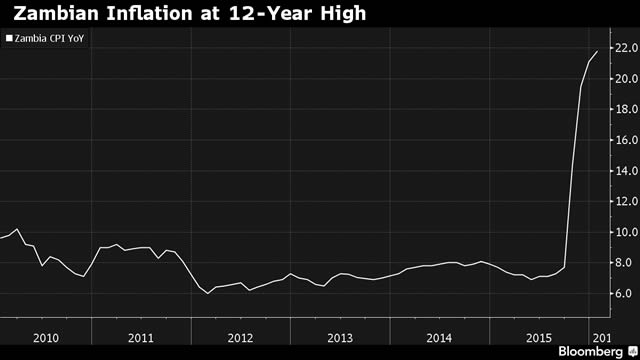
And Dr Matoka has urged the government to be conscious of the cries of the masses over the increase in prices of essential commodities.
In an interview, Dr Matoka who is also a freedom fighter said as the country approaches the next elections, the ordinary voter expected political leaders to visit them frequently as they sell their manifestos.
He said the politicians’ tendency to rush to voters at the last minute with bribes and demands to woo support was a wrong way to go about things.
“…Because Zambia is highly politicised and people can see through those wanting to exploit them,” he said.
Dr Matoka said the culture of insults was completely new to Zambia and Africa in general.
He said it was natural to criticise and constructive criticism was always welcome.
Dr Matoka said offering positive suggestions to one another would be preferred to running to the press for headlines.
He said most people who had been criticised would very much welcome the critics’ visits to their offices or wherever they could see them so that their suggestions would be recorded and put to rest.
And Dr Matoka said the recent increase in fuel prices was a source of concern to the general public.
“Various reasons have been given to justify the rise but we hope the authorities are aware of the cries of the masses over these high prices which automatically affect the general public when it comes to the purchase of a few items of consumption and their maintenance,” he said.
“One would appeal to the authorities to try and assist the general public by either giving notice of prices in good time.”
Dr Matoka said there had been a lot of talk about the economy being in problems during the period of the global recession.
He said fortunately, there had been a resurgence in the country, especially in the mining sector where mines that were closed were opening and copper prices were rising.
Dr Matoka observed that fresh investment was pouring into Zambia from various quarters and one could say that the economy was on a good footing and promises to be better.
However, he said the rate of poverty in Zambia was extremely high not only in rural areas but very much so in urban areas.
Dr Matoka said the investment that was taking place in rural areas especially in the mining field was welcome as it helped to reduce poverty.
He said investment in rural areas helped to keep the population fully occupied instead of rushing to urban areas in search of employment.
Dr Matoka said there had been a lot of criticism on the National Constitutional Conference (NCC).
“I have no right to speak on the NCC but it pains one to listen to various accusations which are baseless at the NCC. We have a variety of organisations represented. freedom fighters, church leaders and people drawn from respectable organisations,” he said.
“Now speaking for freedom fighters, these are people who sacrificed their comfort and their own lives to offer Zambia independence and these are people who have never been given pension, salaries. They did it for the love of the country. This is exactly what they are doing, offering themselves to help establish a constitution that the country will be proud of.”
He said it was not fair to think that they had gone to the NCC to make money.
Dr Matoka also said this applied to people from other organisations who would make more money at their respective organisations but got locked up at the NCC for hours to get Zambia a good constitution.
Labels: INFLATION, PETER MATOKA
Read more...
Matoka attributes xenophobia to economic marginalization
By Agness Changala
Saturday June 28, 2008 [04:01]
THE violence in South Africa should be a reminder that no one should be left behind as a country achieves national prosperity, University of Zambia Development Studies lecturer Dr Peter Matoka has said. During the discussion organised by Chevening Alumni Association (CAA) at the British Council whose theme was 'Xenophobia:
economic or conflict', Dr Matoka said it was everyone's obligation to ensure that the less fortunate in society did not feel economically marginalised because that resulted in xenophobia.
"The xenophobic attacks in South Africa, callous and inhuman as they were, are a chilling reminder to all of us that we have an obligation to ensure that our less fortunate brothers and sisters in society must not feel left behind even as we strive to achieve national prosperity," he said.
Dr Matoka said there was need to collectively take measures that would guarantee those families, communities and the country that they would not witness the horrors of xenophobia again.
He said it was naïve and reckless to assume that the occurrences of xenophobia in other countries was a problem which the affected countries would grapple with and contend.
Dr Matoka added that xenophobia knew no borders and its fault line appeared to be spreading even to the most hospitable countries.
He said racial attacks had the capacity to turn a country's well-intended economic and social policies into a fertile breeding ground for conflict.
He urged Zambians to be reminded of the eagle on the flag because it depicted their ability to soar above the challenges faced including xenophobia.
And former Zambezi East UPND member of parliament Maxwell Mukwakwa, who was in the audience, expressed disappointment with the violence in South Africa.
Mukwakwa said African countries must learn to pay tribute to countries that helped them get liberated.
South African High Commissioner to Zambia Moses Chikane partly attributed the xenophobic attacks in that country to economic marginalisation.
British High Commissioner to Zambia Alistair Harrison said political leaders must make sensible decisions to address the problem of xenophobia as it had the capacity to destroy the good relations at regional and continental level.
Labels: ECONOMY, PETER MATOKA, SOUTH AFRICA, XENOPHOBIA
Read more...