Live within your means and save
Live within your means and saveBy The Post
Mon 08 Oct. 2012, 13:20 CAT
An increasing number of Zambians are living beyond their means, their earnings.
And today, it has become very easy for one to live beyond their means because credit has increased. There are so many micro-financing companies lending money to individuals. And there are also many business enterprises that are advancing goods and services to individuals on credit. Even normal commercial banks are today lending out money to individuals so easily for them to buy cars, houses, wedding dresses and so on and so forth.
It is very dangerous for one to live beyond one's means because this leads to so many temptations and opens a person to wrongdoing.
Many Zambians are today in debt everywhere. And here we are not talking about corporate debt but personal debt, the debts of an individual.
We have people earning a monthly salary of K1 million but living a life of K2 million plus. We also have people whose earnings are in millions of kwacha but living lives of those whose earnings are in billions per month. How is this possible? This is only possible through debt or unearned income. And unearned income is a prima facie case of corruption.
Debt, if not well managed, can easily get out of control. A person can end up in debt before he even realises it. Getting a credit card, taking out a loan or making a major purchase can put you in debt if you don't have sufficient resources to cover the expenses. Loss of employment can easily put one in debt. You may have a good job and good credit, then suddenly you find yourself out of work and the debt begins to mount. Before you know it, your good credit is dwindling as you struggle to maken your payments. When you fall behind, debt quickly takes hold of your life.
Debt can have many negative effects on a person's life. A person with bad credit may steal from his employers or from other people.
Financial problems can have disastrous effects on relationships. Money problems are one of the main causes of marital disputes. Spouses spend time arguing over money because of lack of proper money management on the part of one or both spouses. In some instances, there isn't enough money coming into the household to cover the expenses. In other situations, the income may be insufficient to cover normal expenses but the spending habits are out of control.
Being in debt can put a person under enormous pressure. And with one's mind focused on their debt, sleepless nights can become a pattern. You may find that you are not as efficient as you should be at work, and your temperament may change. People who are suffering from stress often become irritable and short-tempered. Debt can seem like a never-ending circle.
We even have situations today where people are borrowing money to pay off another debt, and the cycle continues. The stress of being in debt can lead to frustration and even depression.
Debt can even affect your physical health. The worry and constant stress of debt can take its toll on your body as well as your mind. People often suffer from headaches, stomach upsets, anxiety and other conditions.
Lack of sleep and not eating properly can have adverse effects on one's health. People often avoid dealing with debt because they just don't see any way out of the dilemma, but this just makes the situation worse - causing more worry, more stress and more adverse effects.
It is best to deal with the ill-effects of debt by taking one step at a time to eliminate the debt. Getting out of debt isn't going to happen overnight, but the longer you try to avoid the debt, the more it will continue to mount. There is need to take steps to conserve your resources.
It's not every kwacha that one earns that should be spent. There is need to save. Even with very low earnings, one can still manage to save something. And the benefits of saving are gigantic. One of the fundamental principles of finance is the concept that K1 today is more valuable than K1 a year from now.
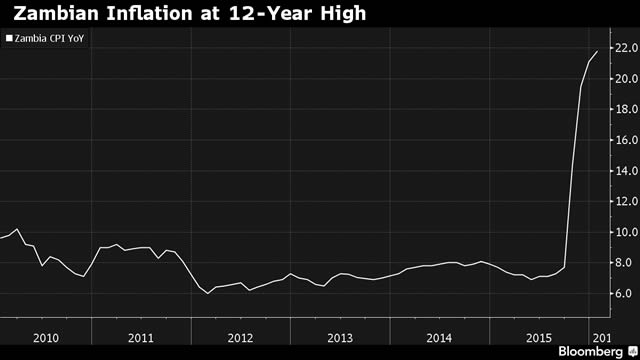
The reason for this is two-fold. First, a kwacha will probably buy fewer goods and services in the future due to the destructive force of inflation. Second, if one has a kwacha in his hands today, one can invest it and earn a return in the form of interest, capital gains or dividends. The best money advice one can ever give you is to firmly establish this time value of money concept in your head. The key to financial prosperity is realising the potential value of every kwacha that comes into your hands. In fact, we think of cash as a seed - you can either eat it, that is spend it; or sow it, that is invest it.
Money, like water, expands to fill the container in which it is placed. If you lack an objective set of financial goals for your life, you probably reach the end of each month and find yourself broke. You vow that next month will be different, but it never is. This scenario is certainly one which is familiar to many of our people. Fortunately, it doesn't have to be that way.
If you find that you do not have enough money to cover all your expenses, find a way to raise money and cover the shortfall. If this means you ordering and selling fish at the market, reducing your drinking sprees, do it.
Think it sounds too hard? If so, you must answer this question for yourself: is the pain of reducing your drinking sprees and other luxuries greater than the pain of being in financial bondage? If it is, you need to resign yourself to remaining in the same financial situation for the rest of your life.
In fact, if you are prone to using debt as a means of upgrading your lifestyle, the problem will probably grow worse with time. Taking control of your finances creates a sense of empowerment that will reach into every area of your life.
The freedom that comes from knowing that you and your family will be provided for regardless of what may come up cannot be expressed in words. It is something you will experience for yourself when you make the decision that being financially independent and secure is more important than impressing your neighbours with material goods.
Labels: LENDING RATES, OLIVER SAASA, SAVINGS
Read more...
posted by MrK @ 4:41 PM
0 Comments