COMMENT - The Windfall Tax should immediately be re-introduced. It is the only way the state can collect taxes on the mines that are of any significance. And violation of tax obligations by mining companies should be harshy punished. No more messing around.
New rule on mine tax overdue - CSPR
By Gift Chanda
Tue 30 Oct. 2012, 14:50 CAT
THE Civil Society for Poverty Reduction says mining investors should not be unsettled by the new rule compelling them to start paying tax before recouping all their investment.
In his 2013 budget, finance minister Alexander Chikwanda cut the applicable capital allowance in the mining sector from 100 per cent to 25 per cent.
The chamber of mines, which represents foreign mining firms, said the new rule would discourage investment in new projects as mine operators would have to start paying tax before recouping all their investment.
But CSPR advocacy and policy dialogue programme officer, Sydney Mwansa said the new rule had been long overdue.
"Capital allowance in the mining sector was pegged at 100 per cent at the time of the global economic crisis to help the mines survive through that crisis and that crisis passed way a long time ago," he said.
"I think it is time those things which were put in place to help the mines survive the 2008 crisis are reversed so that the sector begins to benefit even the ordinary people."
And Mwansa said the government should have reintroduced the windfall tax to help lift the burden on a few employed people paying personal income tax (Pay-As-You-Earn).
"After analysis and reflections this year, where we tried to look at other possibilities of the government raising more revenues, we still arrive at the same position and this position is that we should have reintroduced the windfall tax years ago," he said.
"We still feel windfall tax is the best option as copper prices are currently still high. We feel that the windfall tax as a matter of agency be reintroduced. This is in view of other taxes which are not performing as much as they should; and this is the variable profit tax."
Investors who were irked by the doubling of royalties the government charges mining companies from three percent to six per cent in the 2012 budget are now more unsettled by the new rule compelling them to start paying tax before recouping all their investment.
Capital allowance is the reduction in the amount of corporation tax payable, offered as an incentive for investment in large-scale projects (that increase a country's production capacity and stock of capital). A certain percentage of the capital assets cost is allowed as capital allowance during the accounting period in which it was purchased. This amount is greater than the depreciation charge on the asset during that period.
Labels: ALEXANDER CHIKWANDA, CSPR, MINING, SYDNEY MWANSA, TAXATION, WINDFALL TAX
Read more...
JCTR wary of Rupiah’s projects
By Kabanda Chulu in Kitwe
Fri 10 June 2011, 04:00 CAT
ZAMBIA is heading towards a debt crisis because mining tax arrears and loan portfolios provided for in the 2011 budget are not sufficient to pay for the multi-billion kwacha projects being launched by President Rupiah Banda, says JCTR.
And Jesuit Centre for Theological Reflection (JCTR) programmes officer Sydney Mwansa has said government’s promise to buy all the maize harvested this year will entail additional borrowing because the 2011 budget had only provided K1.3 trillion but over K2 trillion would be required.
Commenting on the Kitwe and Lusaka urban road rehabilitation projects launched by President Banda, Mwansa has challenged government to be more transparent in the way it contracted loans to avoid another debt crisis.
“The mode of financing these works is of great concern since the K3.1 trillion road allocations in the 2011 national budget did not initially include these new road projects but others such as Mongu-Kalabo road, Siavonga-Sinazongwe road, among other roads, government will have to borrow or reallocate resources from other priority areas to complete these new projects.
Even though government is saying these projects will be financed by mining tax arrears and loans, the K555 billion tax arrears and the foreign and domestic loans of 2 per cent and 1.4 per cent of GDP respectively, provided for in the 2011 budget are not sufficient to pay for these mega trillion kwacha projects,” Mwansa said.
“Government will therefore have to borrow beyond the budgetary ceilings which will certainly worsen the country’s debt burden that lately has been on the increase and these loan amounts, conditionalities attached, loan repayment period and the interest payable on the loan must all be publicly disclosed to ensure transparency and to hold government accountable.”
He said maintaining fiscal prudence as elaborated in the 2011 budget and Sixth National Development Plan was essential for translation of macroeconomic gains achieved into tangible benefits.
“However, recent developments don’t guarantee this process, when looking at how much will be spent on maize purchase and government has already borrowed huge loans for contentious projects like mobile clinics and hearses and any further loan contraction will just destabilise the economy,” Mwansa said.
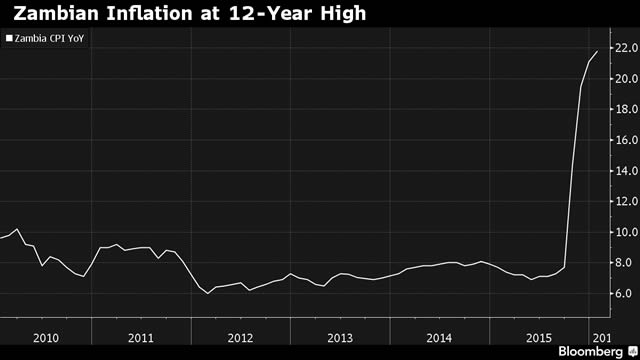
“It will certainly crowd out the private sector (domestic borrowing) as it exerts upward pressure on the bank lending interest rates and creates inflationary pressures.”
There have been growing concerns over the huge expenditure by government and rapid implementation of infrastructure projects by President Banda in the run-up to elections.
Recently, former finance minister Ng’andu Magande also expressed concern about the handling of projects and expenditures that were not even in the national budget.
Labels: JCTR, RUPIAH BANDA, SYDNEY MWANSA
Read more...
Enact debt contraction law, JCTR urges govt
By Kabanda Chulu in Kitwe
Wed 09 Feb. 2011, 04:00 CAT
GOVERNMENT should urgently enact the debt contraction legal framework aimed at increasing transparency, accountability and participation of all stakeholders in the contraction and utilisation of debt resources. This is according to the Jesuit Centre for Theological Reflections (JCTR).
Currently the finance minister is empowered to borrow on behalf of Zambians and this position might result in another debt trap since there has been no transparency and accountability in acquiring debt resources.
Releasing the findings of a case study for Central Province eight water supply and sanitations project which the Zambian government funded through a US$36.9 million loan, acquired from the Africa Development Bank (AfDB) aimed at financing rehabilitation and extension of water supply and sewerage systems as well as ensuring 24-hour water supply availability, JCTR debt resource monitoring project officer Sydney Mwansa said the project had failed despite the huge investments.
“Majority of Kapiri Mposhi residents still have no access to safe drinking water as they still rely on water wells. This is evidenced by the number of wells found in the residential areas where almost each household has a well and a latrine which are placed close to each other thereby increasing chances of contamination and incidences of waterborne diseases,” Mwansa said.
He challenged the government to sit down with all the stakeholders in view of the projects’ failure to improve the living conditions of the people of Kapiri Mposhi.
“There is need for enactment of a debt contraction framework to increase transparency, accountability and participation so that intended beneficiaries have a say on how the project should be undertaken and this legal framework should include Parliament giving approval of all loans to be contracted by government,” Mwansa said.
He said after reaching HIPC completion point, which saw part of Zambia’s external debt cancelled and reduced from US$7.2 billion to US$500 million, it became imperative for the country to ensure that debts remained at a sustainable level.
“However, the country has continued to borrow (current foreign debt stands at over US $4 billion) from international community without legal binding framework of approval from Parliament since CAP 366 of the Laws of Zambia allows the finance minister to borrow on behalf of government,” said Mwansa.
“This lack of legal framework means prudence in loan contraction lies with one individual and Zambia is likely to fall back into the debt trap if this trend continues.”
Labels: AfDB, DEBT, JCTR, SYDNEY MWANSA
Read more...
JCTR calls for transparent, accountable govt debt contraction
By Misheck Wangwe in Kitwe
Thu 05 Aug. 2010, 04:00 CAT
JESUIT Centre for Theological Reflections (JCTR) programme officer for debt, aid and trade Sydney Mwansa has said Zambia needs a transparent and accountable debt contraction law that will compel government to borrow responsibly.
Commenting on government’s recent signing of the US $53 million concessional loan from China for mobile hospitals, Mwansa noted that the issue had raised a lot of concern from various stakeholders because the country had continued to ignore the fact that it needed a more consultative, transparent and accountable debt contraction law.
He said debt had a serious implication on poverty and sustainable development of the country as it took away the country’s resources to debt servicing rather than on social service provision, infrastructure and developmental activities.
“As JCTR, we made a submission to include a law that gives power to Parliament and not the Minister of Finance and National Planning as provided by the current law to oversee and approve all loans to be contracted by government on behalf of the Zambian people,” Mwansa said.
He said the law, if implemented, would ensure that the loans contracted were in line with the development plans of the country and thus avoid unnecessary debates and especially, justifications like the country had seen over the mobile hospitals.
Mwansa said it was disappointing that the NCC failed to reach an agreement of the stipulated two thirds majority votes on the very important proposal from the JCTR and referred it to a referendum.
“Issues of debt are always public matters that affect Zambians. As soon as a loan is contracted, it becomes a public resource and as such, it becomes of public interest as repayment of loans uses public resources derived from taxes. The current law allows the government to contract loans without consultation and without transparency,” Mwansa said.
“As we talk about the mobile clinics or indeed, the hearses and any other loans contracted, let us all reflect on what we are doing to ensure that we have a debt burden-free future. With the draft constitution out and the time for comments already elapsed, there is surely something that could be done to ensure such loan deals and the debates that follow do not occur again.”
He said having suffered under the debt burden, it was imperative that the country learnt a lesson as far as debt contraction was concerned.
Mwansa said with the greater part of Zambia’s debt written off, the country had a chance to not only reorganise and direct her resources towards poverty reduction and infrastructure development but also ensure it borrowed for the right reasons and maintained the debt stock within sustainable levels.
Labels: DEBT, JCTR, SYDNEY MWANSA
Read more...